Inside Track Photo: David O’Donohue
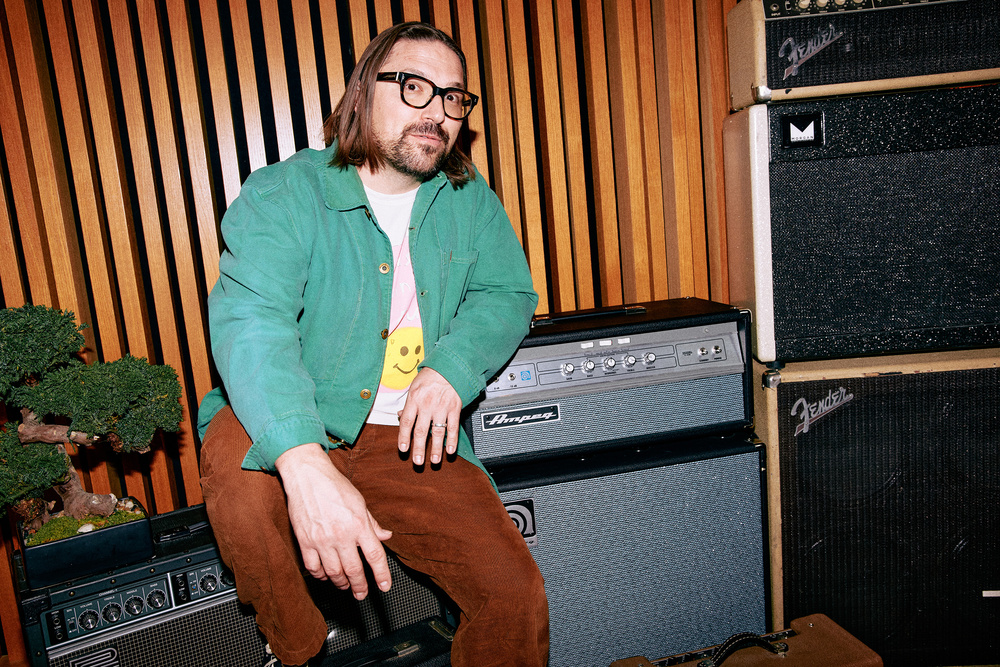
Rediscovering the human has helped producer Gabe Simon to enjoy colossal hit albums with Noah Kahan and Dermot Kennedy.
Gabe Simon’s production and writing career began in EDM and pop. In 2015, he co‐wrote Dua Lipa’s song ‘Begging’; this was followed by writing credits for Maroon 5, Hailee Steinfeld, Anderson.Paak, Rag’n’Bone Man and Lana Del Rey. However, Simon’s big breakthrough came with Noah Kahan’s third solo album, the largely acoustic Stick Season (2022). Kahan’s first two albums had not been particularly successful, but TikTok and a performance of the title track by Olivia Rodrigo on BBC Radio 1 propelled ‘Stick Season’ and its parent album to the top of charts around the world. This success also gave Simon’s career a big push, and his writing, multi‐instrumentalist and production credits since then include Koe Wetzel, James Bay, Halsey, Jonas Brothers and more. He also enjoyed another huge hit album with Dermot Kennedy, The Weight Of The Woods.
Going Without The Flow
Raised in Simpsonville, South Carolina, Gabe Simon began his musical career as an 11‐year old, playing brass. "I did that all the way up to high school. I also did a lot of choral work, and had resigned myself to the idea that I was never going to be a cool kid. Then during high school my buddies and I would sit around playing crappy little guitars on crappy guitar amps, and we had a lot of fun. We jammed in our garage, where we learned to play Radiohead, Chili Peppers and Weezer songs. I started exploring other instruments as well, and taught myself bass and piano. Then I went to Nashville for college and started a group called Kopecky Family Band."
The Kopecky Family Band released two albums for ATO Records, Kids Raising Kids (2010) and Drugs For The Modern Age (2012). Simon meanwhile obtained degrees in music business and entrepreneurship at Nashville’s Belmont University in 2011, where he developed an aversion to the raison d’être of SOS. "I took a class in audio engineering, and was like, ‘This is the worst! I do not want to follow signal flow!’ I liked creating music and guiding people’s musical visions, but I didn’t want anything to do with the technical side of recording music."
The birth of Simon’s oldest daughter in 2016 changed his perspective. "When I had my first daughter, I decided that I did not want to be on the road any more. I wanted to be home. I’m a curious person, and I think it’s fun to explore new sounds, so I started playing unfamiliar instruments and I went more deeply into producing. My other daughter was born in 2019, and having kids made me the producer that I am today. Before, I had the luxury of having the time to try everything. But when you have kids, you don’t, so you get really good at being discerning and understanding what’s a waste of time and a meaningful use of time. I went from second guessing myself all the time, to being more efficient and confident.
"I remain very grateful for my early experiences, because for example my choral work made me appreciate the voice as the most powerful and most unique instrument that we have. As a result, both the Dermot and Noah albums have tons of backing vocals. And there’s a lot of choir on Dermot’s record. We brought in the community choir that he grew up with in college, and recorded it with them walking around a SoundField MkV Ambisonic microphone, creating chords. We did that for every song on his record, to create human dynamics, which adds a whole new layer of emotion.
"I feel that the human aspect gets downplayed in popular music lately, with people opting for Splice effects and sonic perfection, instead of, for example, going into the chorus using a choral bed that goes ‘ooaaahh’. It does not only create some unique sonics, but also provides this immense humanity that listeners don’t even consciously know is there, but that gives them a euphoric feeling that makes them throw back their heads and sing along. It harks back to learning to play guitar in that garage with my friends. All I want is to be free as a kid to make music, and particularly when I produce, I want others to have that same experience."
Pedal Power
As a songwriter, Simon was regularly working with "producers staring at a laptop the whole time", and being a guitar player in a band involved knowing his way around pedals. Slowly, but surely, music tech was creeping up on him.
"By the time of the pandemic something in my brain clicked. I was at home a lot, and thought, ‘I don’t have any outboard, but I have all these bizarre guitar pedals,’ and I found this really cool way of creating unique sounds, whether through using guitars, synths, or my voice. I started with some cheap mics, and also found Logic, and loved it because of the way it looked. I’m big on aesthetics, and found Pro Tools hard to stare at. It made my head hurt. And the layout of Ableton made no sense to my brain. But with Logic things just flowed very simply and aesthetically pleasingly for the way I work. I was making all this music, and there were no rules for what I could accomplish."
In 2022, with Simon finally getting into music technology, he received a request to produce an album for a relatively unknown folk artist. "Noah had started making his third album with another producer, but it wasn’t working out. They called me because they were running out of time, and I was like, ‘I’ve never made a folk record before!’ But again, I’m a curious person, and I was instantly captivated by Noah’s storytelling, which I found really compelling. The visual images in his words are so palpable, I resonated with them immediately.
"I purposefully underproduced that record, so that people would fall in love with Noah, his voice, his lyrics, and his guitar playing. I asked him who usually played guitars on his records, and he said, ‘The producer.’ I was like, ‘That’s odd, because you play guitar really weird. You have a style. We should start by you playing guitar on everything, because nobody plays like you. What makes you unique is not just your voice and your storytelling, it’s also your guitar playing.’ To me, the defining difference between his previous work and Stick Season was that Stick Season was completely Noah, and all I did was try not to get in the way.
"For example, I tried a huge production on the song ‘Stick Season’, with Mellotron and tons of backing vocals and other things. But it just felt too big and thick. It kept distracting from the story and the lyric, which is just so compelling. I dialled it back and dialled it back, until all we had left was Noah’s acoustic guitar, and me thumping a four‐to‐the‐floor rhythm on another acoustic and playing the banjo. I hadn’t really played the banjo before, and was suddenly having a blast watching videos on how to do the four‐finger or claw‐style.
"Noah had most of the initial 14 songs already written. When I came in we co‐wrote ‘Northern Attitude’ and ‘Halloween’ and two more songs on the deluxe edition, but the fact that the other songs were ready allowed us to make the album in just 14 days, at...
You are reading one of the locked Subscribers-only articles from our latest 5 issues.
You've read 30% of this article for FREE, so to continue reading...
- ✅ Log in - if you have a Digital Subscription you bought from SoundOnSound.com
- ⬇️ Buy & Download this Single Article in PDF format 0ドル.83 GBP1ドル.49 USD
For less than the price of a coffee, buy now and immediately download to your computer, tablet or mobile. - ⬇️ ⬇️ ⬇️ Buy & Download the FULL ISSUE PDF
Our 'full SOS magazine' for smartphone/tablet/computer. More info... - 📲 Buy a DIGITAL subscription (or 📖 📲 Print + Digital sub)
Instantly unlock ALL Premium web articles!We often release online-only content.
Visit our Shop Store.