
C11 Binary Size RAM Zero Dependencies MIT License
Run a 1-billion parameter LLM on a 10ドル board with 256MB RAM.
Pure C. Zero dependencies. One binary. No Python. No cloud.
echo "Explain gravity" | ./picolm model.gguf -n 100 -j 4
PicoLM was built as the local brain for PicoClaw — an ultra-lightweight AI assistant in Go that runs on 10ドル hardware. Together, they form a fully offline AI agent — no cloud, no API keys, no internet, no monthly bills.
Every other LLM provider needs the internet. PicoLM doesn't.
| Cloud Provider (OpenAI, etc.) | PicoLM (Local) | |
|---|---|---|
| Cost | Pay per token, forever | Free forever |
| Privacy | Your data sent to servers | Everything stays on-device |
| Internet | Required for every request | Not needed at all |
| Latency | Network round-trip + inference | Inference only |
| Hardware | Needs a 599ドル Mac Mini | Runs on a 10ドル board |
| Binary | N/A | ~80KB single file |
| RAM | N/A | 45 MB total |
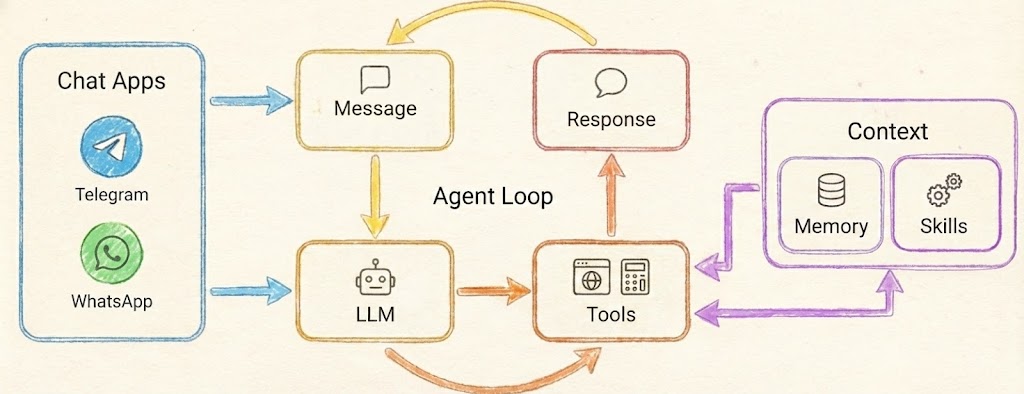
PicoClaw's agent loop spawns PicoLM as a subprocess. Messages come in from Telegram, Discord, or CLI — PicoClaw formats them into a chat template, pipes the prompt to picolm via stdin, and reads the response from stdout. When tools are needed, --json grammar mode guarantees valid JSON even from a 1B model.
Telegram / Discord / CLI
 │
 ▼
 ┌──────────┐ stdin: prompt ┌───────────┐
 │ PicoClaw │ ──────────────────► │ picolm │
 │ (Go) │ ◄────────────────── │ (C) │
 └──────────┘ stdout: response │ + model │
 │ └───────────┘
 ▼ 45 MB RAM
 User gets reply No internet
# 1. Build PicoLM
cd picolm && make native # or: make pi (Raspberry Pi)
# 2. Download model (one-time, 638 MB)
make model
# 3. Build PicoClaw
cd ../picoclaw && make deps && make build
# 4. Configure (~/.picoclaw/config.json)
{
 "agents": {
 "defaults": {
 "provider": "picolm",
 "model": "picolm-local"
 }
 },
 "providers": {
 "picolm": {
 "binary": "~/.picolm/bin/picolm",
 "model": "~/.picolm/models/tinyllama-1.1b-chat-v1.0.Q4_K_M.gguf",
 "max_tokens": 256,
 "threads": 4,
 "template": "chatml"
 }
 }
}
# 5. Chat — fully offline! picoclaw agent -m "What is photosynthesis?"
curl -sSL https://raw.githubusercontent.com/RightNow-AI/picolm/main/install.sh | bash| Device | Price | Generation Speed | RAM Used |
|---|---|---|---|
| Pi 5 (4-core) | 60ドル | ~10 tok/s | 45 MB |
| Pi 4 (4-core) | 35ドル | ~8 tok/s | 45 MB |
| Pi 3B+ | 25ドル | ~4 tok/s | 45 MB |
| Pi Zero 2W | 15ドル | ~2 tok/s | 45 MB |
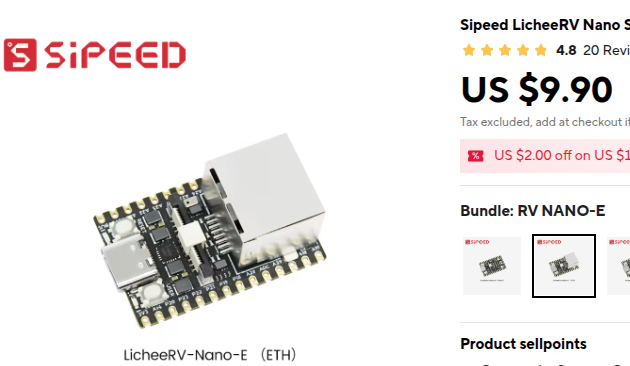
| LicheeRV Nano | 10ドル | ~1 tok/s | 45 MB |
PicoClaw automatically activates --json grammar mode when it needs structured output. This guarantees syntactically valid JSON even from a 1B parameter model — essential for reliable tool calling on tiny hardware:
picoclaw agent -m "Search for weather in Tokyo"
# → PicoLM generates: {"tool_calls": [{"function": {"name": "web_search", "arguments": "{\"query\": \"weather Tokyo\"}"}}]}
For the full PicoClaw documentation, see the PicoClaw README.
PicoLM is a minimal, from-scratch LLM inference engine written in ~2,500 lines of C11. It runs TinyLlama 1.1B (and other LLaMA-architecture models in GGUF format) on hardware that most inference frameworks won't even consider:
- Raspberry Pi Zero 2W (15,ドル 512MB RAM, ARM Cortex-A53)
- Sipeed LicheeRV (12,ドル 512MB RAM, RISC-V)
- Raspberry Pi 3/4/5 (1-8GB RAM, ARM NEON SIMD)
- Any Linux/Windows/macOS x86-64 machine
The model file (638MB) stays on disk. PicoLM memory-maps it and streams one layer at a time through RAM. Total runtime memory: ~45MB including the FP16 KV cache.
 ┌──────────────────────────────────────────┐
 What goes │ 45 MB Runtime RAM │
 in RAM │ ┌─────────┐ ┌──────────┐ ┌───────────┐ │
 │ │ Buffers │ │ FP16 KV │ │ Tokenizer │ │
 │ │ 1.2 MB │ │ Cache │ │ 4.5 MB │ │
 │ │ │ │ ~40 MB │ │ │ │
 │ └─────────┘ └──────────┘ └───────────┘ │
 └──────────────────────────────────────────┘
 ┌──────────────────────────────────────────┐
 What stays │ 638 MB Model on Disk │
 on disk │ (mmap — OS pages in layers │
 (via mmap) │ as needed, ~1 at a time) │
 └──────────────────────────────────────────┘
| Feature | Description |
|---|---|
| GGUF Native | Reads GGUF v2/v3 files directly — no conversion needed |
| K-Quant Support | Q2_K, Q3_K, Q4_K, Q5_K, Q6_K, Q8_0, Q4_0, F16, F32 |
| mmap Layer Streaming | Model weights stay on disk; OS pages in one layer at a time |
| FP16 KV Cache | Halves KV cache memory (44MB vs 88MB for 2048 context) |
| Flash Attention | Online softmax — no O(seq_len) attention buffer needed |
| Pre-computed RoPE | cos/sin lookup tables eliminate transcendentals from hot loop |
| SIMD Acceleration | ARM NEON (Pi 3/4/5) and x86 SSE2 (Intel/AMD) auto-detected |
| Fused Dot Products | Dequantize + dot-product in one pass — no intermediate buffer |
| Multi-threaded matmul | Parallel matrix-vector multiply across CPU cores |
| Grammar-Constrained JSON | --json flag forces valid JSON output (for tool calling) |
| KV Cache Persistence | --cache saves/loads prompt state — skip prefill on re-runs |
| BPE Tokenizer | Score-based byte-pair encoding, loaded from GGUF metadata |
| Top-p Sampling | Temperature + nucleus sampling with configurable seed |
| Pipe-friendly | Reads prompts from stdin: echo "Hello" | ./picolm model.gguf |
| Zero Dependencies | Only libc, libm, libpthread. No external libraries. |
| Cross-platform | Linux, Windows (MSVC), macOS. ARM, x86-64, RISC-V. |
curl -sSL https://raw.githubusercontent.com/RightNow-AI/picolm/main/install.sh | bashThis will:
- Detect your platform (ARM64, ARMv7, x86-64)
- Install build dependencies (
gcc,make,curl) - Build PicoLM with optimal SIMD flags for your CPU
- Download TinyLlama 1.1B Q4_K_M (638 MB)
- Run a quick test
- Generate PicoClaw config
- Add
picolmto your PATH
git clone https://github.com/rightnow-ai/picolm.git
cd picolm/picolm
# Auto-detect CPU (enables SSE2/AVX on x86, NEON on ARM)
make native
# Download a model
make model
# Run it
./picolm /opt/picolm/models/tinyllama-1.1b-chat-v1.0.Q4_K_M.gguf \
 -p "The meaning of life is" -n 100
cd picolm
build.bat
picolm.exe model.gguf -p "Hello world" -n 50
make native # x86/ARM auto-detect (recommended for local machine)
make pi # Raspberry Pi 3/4/5 (64-bit ARM + NEON SIMD)
make pi-arm32 # Pi Zero / Pi 1 (32-bit ARM)
make cross-pi # Cross-compile for Pi from x86 (static binary)
make riscv # RISC-V (Sipeed LicheeRV, etc.)
make static # Static binary for single-file deployment
make debug # Debug build with symbols, no optimization
PicoLM — ultra-lightweight LLM inference engine
Usage: picolm <model.gguf> [options]
Generation options:
 -p <prompt> Input prompt (or pipe via stdin)
 -n <int> Max tokens to generate (default: 256)
 -t <float> Temperature (default: 0.8, 0=greedy)
 -k <float> Top-p / nucleus sampling (default: 0.9)
 -s <int> RNG seed (default: 42)
 -c <int> Context length override
 -j <int> Number of threads (default: 4)
Advanced options:
 --json Grammar-constrained JSON output mode
 --cache <file> KV cache file (saves/loads prompt state)
Basic generation:
./picolm model.gguf -p "Once upon a time" -n 200Greedy decoding (deterministic, temperature=0):
./picolm model.gguf -p "The capital of France is" -n 20 -t 0
# Output: Paris. It is the largest city in France and...
Chat with TinyLlama (ChatML format):
./picolm model.gguf -n 200 -t 0.7 -p "<|user|>
What is photosynthesis?</s>
<|assistant|>
"
Force JSON output (for tool calling / structured data):
./picolm model.gguf --json -t 0.3 -n 100 -p "<|user|>
Return the current time as JSON.</s>
<|assistant|>
"
# Output: {"time": "12:00 PM"}
Pipe from stdin:
echo "Explain quantum computing in one sentence" | ./picolm model.gguf -n 50
KV cache — skip repeated prefill:
# First run: processes prompt + saves cache
./picolm model.gguf --cache prompt.kvc -p "Long system prompt here..." -n 50
# Second run: loads cache, skips prompt prefill (74% faster)
./picolm model.gguf --cache prompt.kvc -p "Long system prompt here..." -n 50
# Output: "Skipping 25 cached prompt tokens"
Multi-threaded on a Pi 4 (4 cores):
./picolm model.gguf -p "Hello" -n 100 -j 4Measured on TinyLlama 1.1B Q4_K_M (638 MB model):
| Metric | x86-64 (8 threads) | Pi 4 (4 cores, NEON) | Pi Zero 2W |
|---|---|---|---|
| Prefill | ~11 tok/s | ~6 tok/s | ~1.5 tok/s |
| Generation | ~13 tok/s | ~8 tok/s* | ~2 tok/s* |
| Runtime RAM | 45 MB | 45 MB | 45 MB |
| First token | ~2.3s | ~4s | ~16s |
| Binary size | ~80 KB | ~70 KB | ~65 KB |
*Estimated with NEON SIMD enabled. Actual numbers depend on SD card speed and thermal throttling.
 Raw C inference ████████████░░░░░░░░ 13.5 tok/s (baseline: 1.6)
 + Fused dot products ████████████████░░░░ (eliminate dequant buffer)
 + Multi-threaded matmul █████████████████░░░ (4-8 cores in parallel)
 + FP16 KV cache █████████████████░░░ (halve memory bandwidth)
 + Pre-computed RoPE ██████████████████░░ (no sin/cos in hot loop)
 + Flash attention ██████████████████░░ (no O(n) attention alloc)
 + NEON/SSE2 SIMD ███████████████████░ (4-wide vector ops)
 + KV cache persistence ████████████████████ (skip prefill entirely)
 ┌─────────────────────────────────┐
 │ picolm.c │
 │ CLI + Generation Loop │
 └──────┬──────────────┬───────────┘
 │ │
 ┌────────────┘ └────────────┐
 │ │
 ┌────────┴────────┐ ┌──────────┴──────────┐
 │ model.h/c │ │ sampler.h/c │
 │ GGUF Parser │ │ Temperature + │
 │ mmap Layer │ │ Top-p Sampling │
 │ Streaming │ └──────────┬──────────┘
 │ Forward Pass │ │
 │ KV Cache I/O │ ┌──────────┴──────────┐
 └───┬────────┬────┘ │ grammar.h/c │
 │ │ │ JSON Constraint │
 ┌────────┘ └───────┐ │ Logit Masking │
 │ │ └─────────────────────┘
┌─────┴──────┐ ┌───────┴────────┐
│ tensor.h/c │ │ tokenizer.h/c │
│ matmul │ │ BPE Encode │
│ rmsnorm │ │ Decode │
│ softmax │ │ Vocab Lookup │
│ rope │ └────────────────┘
│ silu │
│ threading │
└─────┬──────┘
 │
┌─────┴──────┐
│ quant.h/c │
│ Q4_K, Q6_K │
│ Q3_K, Q2_K │
│ FP16, F32 │
│ NEON + SSE │
│ Fused Dots │
└────────────┘
Input Token
 │
 ▼
┌───────────────┐
│ Embedding │ Dequantize row from token_embd → x[2048]
│ Lookup │
└───────┬───────┘
 │
 ▼
┌───────────────┐ ×ばつ22 layers
│ RMSNorm │─────────────────────────────────────────┐
│ │ │
│ Q = xb @ Wq │ Matrix-vector multiply (quantized) │
│ K = xb @ Wk │ Store K,V in FP16 KV cache │
│ V = xb @ Wv │ │
│ │ │
│ RoPE(Q, K) │ Rotary position encoding (table lookup)│
│ │ │
│ Attention │ Flash attention with online softmax │
│ (GQA 32→4) │ Grouped-query: 32 Q heads, 4 KV heads │
│ │ │
│ x += Out@Wo │ Output projection + residual │
│ │ │
│ RMSNorm │ │
│ │ │
│ SwiGLU FFN │ gate=SiLU(xb@Wg), up=xb@Wu │
│ │ x += (gate*up) @ Wd │
└───────┬───────┘─────────────────────────────────────────┘
 │
 ▼
┌───────────────┐
│ Final RMSNorm │
│ x @ W_output │─→ logits[32000]
└───────┬───────┘
 │
 ▼
┌───────────────┐
│ Grammar Mask │ (if --json: force valid JSON structure)
│ Sample Token │ temperature → softmax → top-p → pick
└───────────────┘
For TinyLlama 1.1B Q4_K_M with 2048 context length:
| Component | Size | Notes |
|---|---|---|
| FP16 KV cache | ~40 MB | 22 layers x 2 x 2048 x 256 x 2 bytes |
| Tokenizer | ~4.5 MB | 32K vocab strings + scores + sorted index |
| Activation buffers | ~0.14 MB | x, xb, xb2, q, hb, hb2 |
| Logits buffer | ~0.12 MB | 32000 x 4 bytes |
| Dequant scratch | ~0.02 MB | Max(n_embd, n_ffn) floats |
| Norm weights (pre-dequant) | ~0.35 MB | 45 norm vectors x 2048 x 4 bytes |
| RoPE tables | ~0.03 MB | cos + sin x 2048 x 32 entries |
| Total runtime | ~45 MB | |
| Model file (on disk) | 638 MB | Memory-mapped, ~1 layer in RAM at a time |
With 512 context (for constrained devices):
| Component | Size |
|---|---|
| FP16 KV cache | ~10 MB |
| Everything else | ~5 MB |
| Total | ~15 MB |
PicoLM implements 9 optimizations that brought generation speed from 1.6 tok/s to 13.5 tok/s on x86, with even larger gains expected on ARM with NEON:
4-wide float vector operations for all hot paths. Example: dequantizing Q4_K nibbles with vmovl_u8 → vmovl_u16 → vcvtq_f32_u32, and RoPE with interleaved vld2q_f32 / vst2q_f32.
Auto-detected on Intel/AMD. 4-wide __m128 operations for dot products, RMSNorm, and vector operations.
Key and value vectors stored as 16-bit floats instead of 32-bit. Halves KV cache memory from ~88MB to ~44MB. Conversion uses software fp32_to_fp16() / fp16_to_fp32() — no hardware FP16 support required.
Sine and cosine values for all positions computed once at model load. The forward pass does a table lookup instead of calling sinf() / cosf() / powf() 64 times per token.
Single-pass attention with running maximum rescaling. Eliminates the O(seq_len) attention score buffer — critical for long contexts on memory-constrained devices.
vec_dot_q4_K_f32() dequantizes and accumulates in one pass. No intermediate float buffer for the weight row. Reduces memory traffic by ~50% for matmul.
matmul() distributes output rows across threads using pthreads. Each thread processes its chunk independently with fused dot products. Scales linearly up to ~8 cores.
The --json mode pre-analyzes every token in the vocabulary at load time (brace delta, bracket delta, quote parity). During generation, it masks logits to guarantee syntactically valid JSON — essential for tool-calling with small models.
--cache file.kvc saves the FP16 KV cache state after prompt processing. On the next run with the same prompt, it loads the cache and skips prefill entirely. 74% latency reduction for repeated system prompts.
PicoLM supports any LLaMA-architecture model in GGUF format:
| Model | Parameters | GGUF Size (Q4_K_M) | RAM Needed |
|---|---|---|---|
| TinyLlama 1.1B | 1.1B | 638 MB | ~45 MB |
| Llama 2 7B | 7B | 4.1 GB | ~200 MB |
| Phi-2 | 2.7B | 1.6 GB | ~90 MB |
Recommended for embedded: TinyLlama 1.1B Q4_K_M — fits comfortably on devices with 256MB+ RAM.
Q2_K Q3_K Q4_K Q4_0 Q5_K Q6_K Q8_0 F16 F32
PicoLM/
├── README.md ← you are here
├── BLOG.md ← technical deep-dive blog post
├── install.sh ← one-liner Pi installer
│
├── picolm/ ← the inference engine (pure C)
│ ├── picolm.c ← CLI entry point, generation loop (273 lines)
│ ├── model.h/c ← GGUF parser, mmap, forward pass (146 + 833 lines)
│ ├── tensor.h/c ← matmul, rmsnorm, softmax, rope (44 + 298 lines)
│ ├── quant.h/c ← dequantization, SIMD kernels (140 + 534 lines)
│ ├── tokenizer.h/c ← BPE tokenizer (32 + ~200 lines)
│ ├── sampler.h/c ← temperature + top-p sampling (19 + ~100 lines)
│ ├── grammar.h/c ← JSON grammar constraints (64 + 175 lines)
│ ├── Makefile ← build targets for all platforms
│ └── build.bat ← Windows MSVC build script
│
└── tinyllama-1.1b-chat-v1.0.Q4_K_M.gguf ← model file (638 MB, not in git)
Total C source: ~2,500 lines. That's the entire inference engine — GGUF parsing, mmap, dequantization, matrix math, attention, tokenization, sampling, and grammar constraints.
Traditional inference engines load the entire model into RAM. PicoLM doesn't. Instead:
- The model file is memory-mapped (
mmapon Linux/macOS,MapViewOfFileon Windows) - Weight pointers point directly into the mapped file — no copying
- During the forward pass, each layer's weights are accessed sequentially
- The OS automatically pages in the needed weights and evicts old ones
madvise(MADV_SEQUENTIAL)hints the access pattern to the kernel
Result: A 638MB model runs on a device with 256MB RAM. Only ~30MB of the model is in physical memory at any time.
Weights are stored in 4-bit quantized format (Q4_K_M). For TinyLlama:
- Original: 1.1B parameters x 4 bytes = 4.4 GB
- Q4_K: 1.1B parameters x ~0.56 bytes = 638 MB
- Quality loss: Minimal — Q4_K preserves 6-bit scales per 32-weight sub-block
TinyLlama uses 32 query heads but only 4 key/value heads. Each KV head is shared by 8 query heads. This reduces KV cache size by 8x compared to full multi-head attention.
| Platform | Requirements |
|---|---|
| Linux/Pi | gcc, make (install via apt install build-essential) |
| macOS | Xcode Command Line Tools (xcode-select --install) |
| Windows | Visual Studio Build Tools (cl.exe) |
# Build
make native
# Test with greedy decoding (deterministic output)
./picolm model.gguf -p "The capital of France is" -n 20 -t 0
# Expected: "Paris. It is the largest city in France..."
# Test JSON mode
./picolm model.gguf --json -p "Return JSON with name and age" -n 50 -t 0.3
# Expected: valid JSON like {"name": "...", "age": ...}
# Test KV cache
./picolm model.gguf --cache test.kvc -p "Hello" -n 10 -t 0
./picolm model.gguf --cache test.kvc -p "Hello" -n 10 -t 0
# Second run should say "Skipping N cached prompt tokens"
PicoLM prints memory stats to stderr:
Memory: 1.17 MB runtime state (FP16 KV cache separate)
Total = runtime state + FP16 KV cache. For TinyLlama with 2048 context: ~45 MB.
Q: Can this run Llama 2 7B? A: Yes, if you have enough RAM for the KV cache (~1.4 GB for 7B with 4096 context). The model file stays on disk via mmap. On a Pi 4 with 4GB RAM, it works but is slow (~1-2 tok/s).
Q: Why not use llama.cpp? A: llama.cpp is excellent but requires ~200MB+ for the runtime on small models, has complex build dependencies, and targets desktop/server use cases. PicoLM is purpose-built for embedded: 45MB RAM, 80KB binary, zero dependencies.
Q: Is the output quality good?
A: TinyLlama 1.1B is a small model — it handles simple tasks (Q&A, summarization, basic reasoning, JSON generation) well. It won't match GPT-4, but it runs on a 10ドル board with no internet. For structured output, the --json grammar mode guarantees valid JSON regardless of model quality.
Q: What about GPU acceleration? A: PicoLM is CPU-only by design. The target hardware (10ドル-15 boards) doesn't have GPUs. On x86/ARM CPUs, SIMD (NEON/SSE2) provides meaningful speedup.
Q: Can I use a different model? A: Any LLaMA-architecture GGUF model works. Download from HuggingFace and point PicoLM at it. Recommended quantizations: Q4_K_M (best quality/size balance) or Q2_K (smallest, lower quality).
- AVX2/AVX-512 kernels for x86 (2-4x generation speed on modern CPUs)
- Speculative decoding with a draft model
- Context sliding window (infinite generation beyond max_seq_len)
- Weight pruning for further memory reduction
- Continuous batching for server mode
- Mistral / Phi architecture support
For a detailed writeup of the optimization journey (with code snippets and war stories), see BLOG.md.
MIT License. See LICENSE for details.
PicoLM — because intelligence shouldn't require a data center.