United Nations
Office for Disarmament
Affairs
Spotlights
See the top, latest stories and events coming from UNODA.
- I Nakamitsu HR Remarks
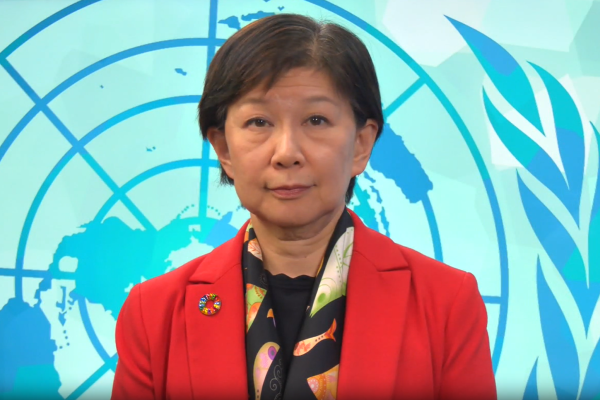
High Representative Izumi Nakamitsu Delivers a Video Message to the Seventh Session of the Working Group on the Strengthening of the Biological Weapons Convention
On 1 December, High Representative for Disarmament Affairs Izumi Nakamitsu delivered an opening message to the Seventh Session of the Working Group on the Strengthening of the Biological Weapons Convention.
- [画像:High Representative for Disarmament Affairs Izumi Nakamitsu at joint ROK-UN Conference]
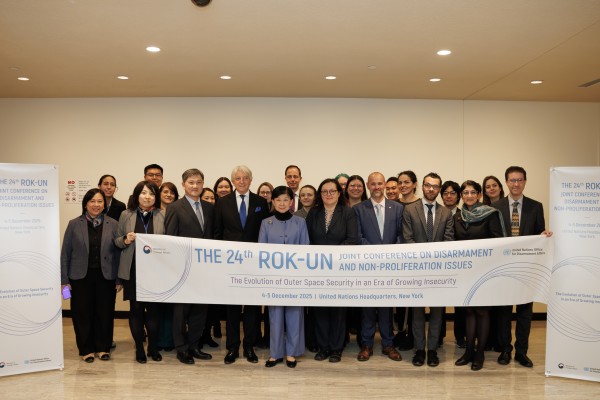
High Representative Izumi Nakamitsu Delivers Remarks at the 24th ROK-UN Joint Conference on Disarmament and Non-Proliferation Issues
The UN Office for Disarmament Affairs and the Republic of Korea (ROK) opened the 24th ROK-UN Joint Conference on Disarmament and Non-Proliferation Issues, held on 4-5 December 2025 at UN Headquarters in New York, bringing together diplomats, experts, and stakeholders to examine the rapidly evolving security dynamics of outer space.
- [画像:UNSGM Training Course]
UNSGM experts join training course on sampling and transport of toxic and infectious substances
From 17-21 November 2025, the United Nations Office for Disarmament Affairs (UNODA), in cooperation with the German Federal Foreign Office, the Robert Koch Institute (RKI) and the Public Health Agency of Canada (PHAC)’s National Microbiology Laboratory, organized a training course on sampling and transport of toxic and infectious substances for the United Nations Secretary-General’s Mechanism for Investigations of Alleged Use of Chemical and Biological Weapons (UNSGM) in Berlin, Germany.
- [画像:High Representative for Disarmament Affairs Izumi Nakamitsu delivers opening remarks]
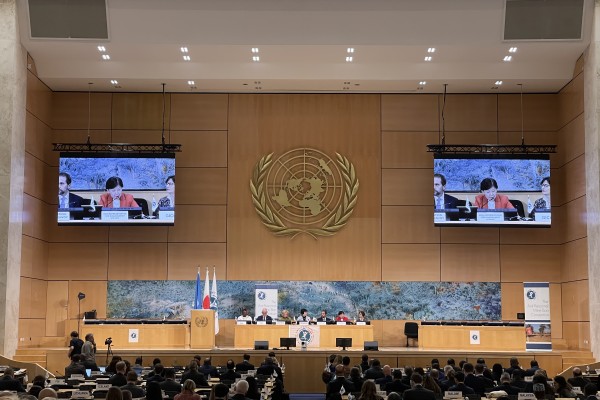
High Representative Izumi Nakamitsu Delivers Opening Remarks at the Twenty-Second Meeting of States Parties to the Anti-Personnel Mine Ban Convention
On 1 December in Geneva, High Representative Izumi Nakamitsu Delivers Opening Remarks at the Twenty-Second Meeting of States Parties to the Anti-Personnel Mine Ban Convention.
- [画像:High Rep Statement]
High Representative Izumi Nakamitsu Delivers a Video Message to the International Conference on "50 Years of Biological Weapons Convention (BWC): Strengthening Biosecurity in the Global South"
On December 1st, High Representative for Disarmament Affairs Izumi Nakamitsu delivered a video message to the International Conference on "50 Years of Biological Weapons Convention (BWC): Strengthening Biosecurity in the Global South" in New Delhi.
- [画像:Izumi Conference Nairobi on BWC]
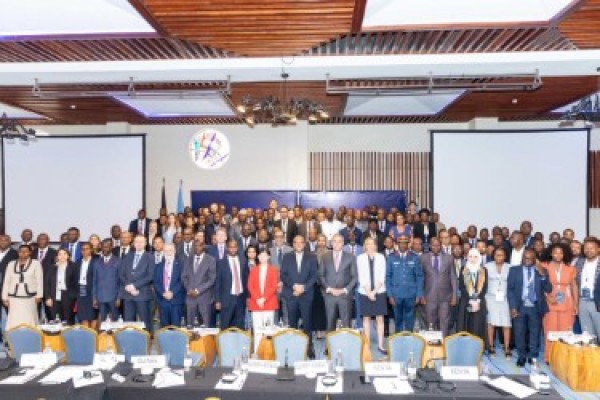
High Representative Izumi Nakamitsu Delivers Opening Remarks at the African Conference on the Biological Weapons Convention
On October 26th, High Representative Izumi Nakamitsu Delivered Opening Remarks at the African Conference on the Biological Weapons Convention
- [画像:High Representative for Disarmament Affairs Izumi Nakamitsu delivers a video message for the ASEAN Regional Forum Workshop on Peace and Security in Outer Space]
High Representative Izumi Nakamitsu delivered a video message at the ASEAN Regional Forum Workshop on Peace and Security in Outer Space
On 26 November, in Manila, High Representative for Disarmament Affairs Izumi Nakamitsu delivered a video message at the ASEAN Regional Forum Workshop on Peace and Security in Outer Space.
- [画像:High Representative for Disarmament Affairs Izumi Nakamitsu]
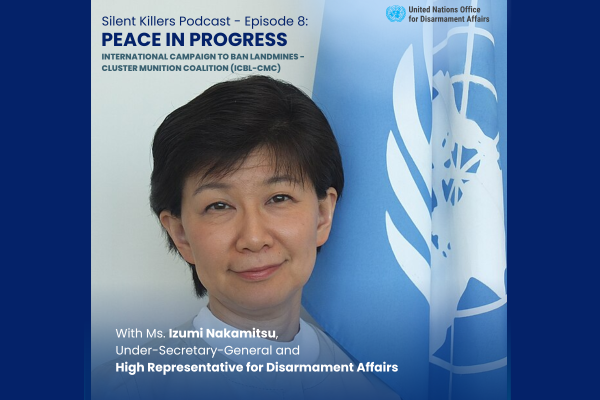
High Representative Izumi Nakamitsu Joined a Podcast on Humanitarian Disarmament and Mine Action
This week, the United Nations Under-Secretary-General and High Representative for Disarmament Affairs Izumi Nakamitsu joined the International Campaign to Ban Landmines - Cluster Munition Coalition (ICBL-CMC) podcast ‘Silent Killers’ to discuss the United Nations' efforts to uphold humanitarian disarmament treaties and fulfill the promise of a mine-free world.
- [画像:Graphic of the UNSGM BCSM Training]
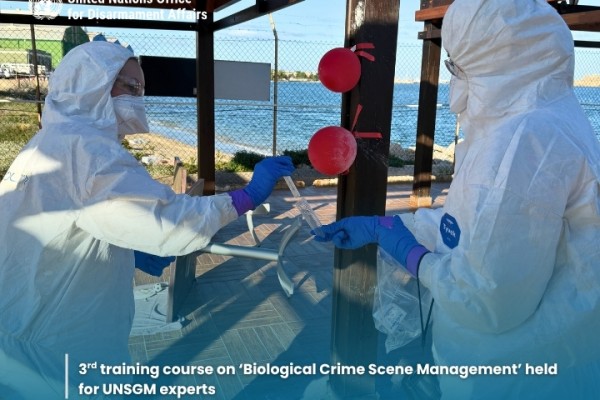
3rd training course on ‘Biological Crime Scene Management’ held for UNSGM experts
From 3-7 November 2025, the United Nations Office for Disarmament Affairs (UNODA), in cooperation with INTERPOL’s Bioterrorism Prevention Unit and the Public Health Agency of Canada’s National Microbiology Laboratory, organized a training course on biological crime scene management for the United Nations Secretary-General’s Mechanism for Investigations of Alleged Use of Chemical and Biological Weapons (UNSGM) at the United Nations Global Service Centre – Conference and Learning Centre (UNGSC-CLC) in Brindisi, Italy.


Updates
See the top, latest stories and events coming from UNODA.
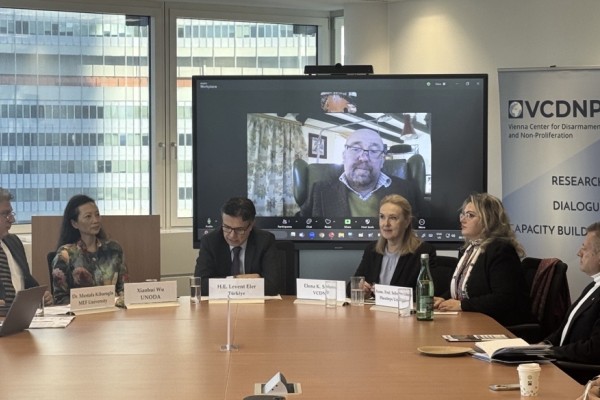
Panel Discussion Highlights How Resolution 1540 Builds Knowledge and Capacity
In a dynamic effort to strengthen global security through education and collaboration, experts and officials gathered in Vienna to spotlight the transformative role of United Nations Security Council Resolution 1540. On 28 November, the Vienna Center for Disarmament and Non-Proliferation (VCDNP), the United Nations Office for Disarmament Affairs (UNODA), and the Permanent Mission of Türkiye to the United Nations in Vienna co-organized a panel discussion to explore the educational and capacity-building impact of resolution 1540.
In his opening remarks, Ambassador Levent Eler,...
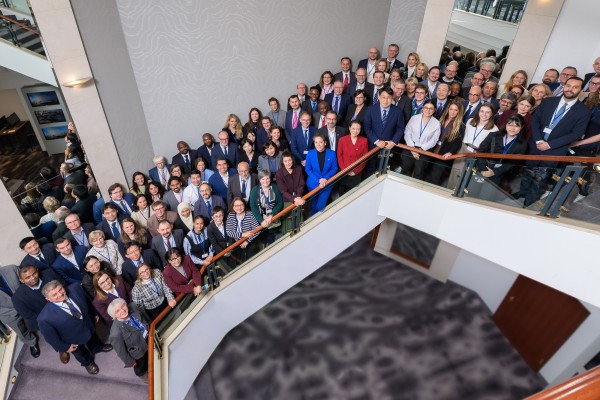
From Erlangen to Munich: Advancing Academia’s Engagement on Export Controls
Every great journey begins with a single step. When the Erlangen Initiative was launched in 2023 to foster collaboration between academia and regulators in implementing United Nations Security Council Resolution 1540, that first step was taken. Today, the dialogue has advanced to Munich, marking a significant step forward in deepening this engagement.
On 26–27 November 2025, the German Federal Office for Economic Affairs and Export Control, in partnership with the United Nations Office for Disarmament Affairs, organized the 3rd Erlangen Global Conference in Munich, Germany. The...
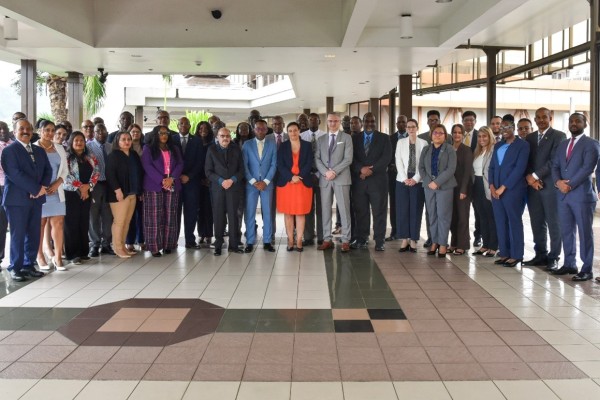
Regional Workshop on the Biological Weapons Convention in the Caribbean
From 25 to 26 November 2025, in Port of Spain, Trinidad and Tobago, the United Nations Office for Disarmament Affairs (UNODA) and the Biological Weapons Convention (BWC) Implementation Support Unit (ISU) organized a regional workshop on strengthening the implementation of the BWC. The workshop was organized in cooperation with the Ministry of Foreign and CARICOM Affairs and the Ministry of Health of Trinidad and Tobago and was made possible with the financial support from the European Union.
Photo credit: European Union Delegation to the Republic of Trinidad and TobagoThe...
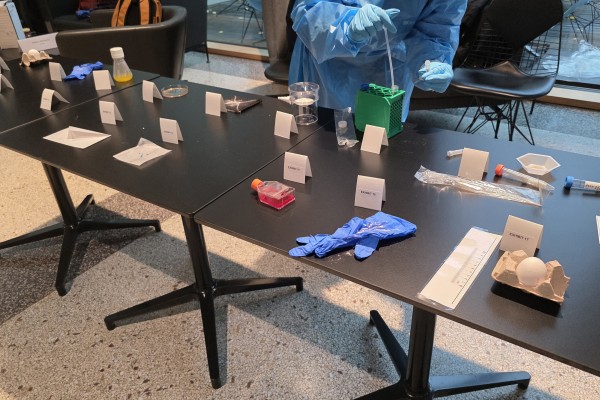
UNSGM experts join training course on sampling and transport of toxic and infectious substances
From 17-21 November 2025, the United Nations Office for Disarmament Affairs (UNODA), in cooperation with the German Federal Foreign Office, the Robert Koch Institute (RKI) and the Public Health Agency of Canada (PHAC)’s National Microbiology Laboratory, organized a training course on sampling and transport of toxic and infectious substances for the United Nations Secretary-General’s Mechanism for Investigations of Alleged Use of Chemical and Biological Weapons (UNSGM) in Berlin, Germany.
A group of 15 qualified experts nominated by Member States to the UNSGM roster from 14...
Events and Announcements
See the top events and announcements from UNODA.
Meetings and Events
Announcements
- [画像:2024 Disarmament Yearbook full edition]
2024 Disarmament Yearbook
The full edition of the 2024 Disarmament Yearbook is out!
- [画像:Gender perspectives course banner]
Gender Perspectives course
New "Gender Perspectives on Disarmament" course available
SG Statements
HR Statements
Press Releases
ODA at a glance
UNODA supports the development and implementation of practical disarmament measures after a conflict, such as disarming and demobilizing former combatants and helping them to reintegrate in civil society.
Established in January 1998
United Nations ODA was established in January 1998 as the Department for Disarmament Affairs which was part of the SG’s programme for reform in accordance with his report to the General Assembly (A/51/950).
Supports General and complete disarmament
The Office for Disarmament Affairs supports multilateral efforts aimed at achieving the ultimate goal of general and complete disarmament under strict and effective international control. The mandate for the programme is derived from the priorities established in relevant General Assembly resolutions and decisions in the field of disarmament, including the Final Document of the Tenth Special Session of the General Assembly, the first special session devoted to disarmament (resolution S-10/2).
Provides support in the area of disarmament
UNODA provides substantive and organizational support for norm-setting in the area of disarmament through the work of the General Assembly and its First Committee, the Disarmament Commission, the Conference on Disarmament and other bodies. It fosters disarmament measures through dialogue, transparency and confidence-building on military matters, and encourages regional disarmament efforts; these include the United Nations Register of Conventional Arms and regional forums.
Provides information to Member States
UNODA provides objective, impartial and up-to-date information on multilateral disarmament issues and activities to Member States, States parties to multilateral agreements, intergovernmental organizations and institutions, departments and agencies of the United Nations system, research and educational institutions, civil society, especially non-governmental organizations, the media and the general public.
Structure of ODA
The main parts of the Office for Disarmament Affairs, the Security Council, the Economic and Social Council, the Trusteeship Council, the International Court of Justice, and the UN Secretariat. All were established in 1945 when the UN was founded.
Weapons of Mass Destruction
Support to multilateral disarmament and non-proliferation efforts with respect to weapons of mass destruction (WMD).
Conventional Arms
Focusing disarmament and arms control efforts on all weapons not considered WMD, including small arms and light weapons (SALW).
Regional Disarmament
The enhancement of global disarmament and international peace and security through the support and promotion of regional disarmament efforts.
Emerging Challenges
Include UNODA’s work in science and technology, AI, autonomous weapons, ICT and outer space, among other areas.
Cross-cutting issues
Include UNODA’s work in education, youth, gender, counter-terrorism the environment, among other areas.
Watch and Learn
Video and audio from across the United Nations and our world-wide family of agencies, funds, and programmes.
What is disarmament?
Throughout history, countries have pursued disarmament to stop arms races, build trust, and protect people from harm. Disarmament has been central to the work of the United Nations since its founding, and it is critical for building a more secure and peaceful world. But what actually is disarmament? This video introduces audiences to the ideas and concepts behind disarmament and arms control.
How does disarmament and arms control work?
This video takes a look at the processes and mechanisms behind modern disarmament and arms control, and how we work together to realise disarmament goals.
How to engage
In this video we look at how individuals can engage with disarmament, and the importance of strengthening cooperation and coordination at all levels. We also look at the need to engage with more diverse groups to bring new perspectives, expertise and ideas to the table.
Disarmament in the 21st Century
This video introduces audiences to "Securing our Common Future", the Secretary-General’s Agenda for Disarmament. The Agenda is based on four key pillars designed to bring the objectives of disarmament into the 21st century. Examining each of the pillars, this video looks at how we approach disarmament today.
Disarmament and the Sustainable Development Goals
Here we take a look at the vital role disarmament and arms control play in achieving the sustainable development goals.