2022年8月26日金曜日
【別冊シーサイドももち】〈002〉ダンスフロアでボンダンス
埋め立て地にできたニュータウン「シーサイドももち」の、前史から現代までをマニアックに深掘りした『シーサイドももち―海水浴と博覧会が開いた福岡市の未来―』(発行:福岡市/販売:梓書院)。
この本は、博多・天神とは違う歴史をたどってきた「シーサイドももち」を見ることで福岡が見えてくるという、これまでにない一冊です。
本についてはコチラ。
この連載では「別冊 シーサイドももち」と題して、本には載らなかった蔵出し記事やこぼれ話などを紹介しています。ぜひ本とあわせてお楽しみいただければ、うれしいです。
第1回はコチラ(「よかトピアに男闘呼組がやってきた!」)。
第2回は、さらに時をさかのぼり、昭和の時代にあった海水浴場でのお話です。

〈002〉ダンスフロアでボンダンス
お盆といえば、なんといっても盆踊りですよね!
ここ数年はコロナ禍ということもあり、人が集まるお祭りなんかは中止を余儀なくされましたが、今年は3年ぶりに行動制限のないお盆休みということで、開催されたところもあったようです。
盆踊りといえば、提灯が飾られたやぐらの上に太鼓やお囃子、そして歌い手が立ち、その周りをみんなでぐるぐる、一定のリズムに乗って同じ踊りを踊る…。
この音頭のリズム、もはやDNAに深く刻まれているのでは? と思うほど、正確な振付を知らなくても、自然と身体が動いてしまいます。
盆踊りは日本に限らず、今ではハワイやマレーシアなどでも「ボンダンス」として広まっていて、時には数万人が集まって盛り上がるのだそうです。
そんな一体感も楽しい盆踊りは、今も昔もまさに夏の風物詩です。

ところで昭和初期、当時の福岡市内で初めて盆踊り大会が開催されたのは、実は百道だったという話があることをご存知ですか?
それは昭和3(1928)年のこと。会場は、当時百道にあった海水浴場でのことでした。
百道海水浴場を運営していた福岡日日新聞社(西日本新聞社の前身)はこの年、姪浜町の炭鉱から踊り手を呼んで、盆踊り大会を開催しました(姪浜は昭和8年まで福岡市ではなく早良郡でした)。
これが当時の新聞紙面で「福岡市内で最初の盆踊り」と報じられています(「福岡日日新聞」昭和3年8月15日夕刊)。
盆踊りはそもそも、村や町内など、ごく限られたコミュニティの人々による、死者の供養や地域の娯楽のための行事でしたが、西新で初めて行われた盆踊りは、別の地域から踊り手を呼んだ〝イベント盆踊り〟だったんですね。なんて都会的…。
盆踊りが普及していった背景には、レコードやラジオの存在が大きな意味を持っていました。
昭和8(1933)年に「東京音頭」が大ヒットしたことで音頭ブームが起こり、戦後は昭和23(1948)年に発売された赤坂小梅の「炭坑節」の大ヒットなどにより、民謡ブームが巻き起こります。そして、これらのヒット曲が盆踊りに採用され、広まっていきました。

こうして広まった盆踊りですが、昭和20年代後半になるとさらに大きな進化を遂げていきます。当時のレコード会社は、戦後に各所で設立された民謡(民踊)団体と提携し、制作した音頭や民謡に振付をして「踊る音楽」として売り出しました。今でいう、ダンスミュージックです。
そうしたダンスミュージックが求められた背景には、戦時中の厳しい抑圧から解放された若者の間でフォークダンスやスクエアダンスなど、みんなで踊る〝ダンス〟(レクリエーション)が流行していたこともありました。
その中で、盆踊りもレクリエーションの一環として広まり、年齢を問わず楽しまれたのでしょう。
さらに、レコード会社はプロモーションのため、また協会は民踊普及のため、新曲レコードを流して日本舞踊の一流の師匠が踊りを教えるという、その名も〝ボンダンス講習会〟を、全国各地で開催します。
百道海水浴場は夜も営業していたので、こうしたボンダンス講習会や、またフォークダンスなどのダンスパーティの会場として頻繁に利用されました。百道の浜は、夜な夜な若者が集まる場所でもあったようです。
最近話題になる、Bon Joviやサカナクションの曲に合わせて盆踊りを踊るという、いわば〝盆踊りアップデート〟ですが、実は昨日今日に始まったものではなく、約50年前の若者も同じように、盆踊り会場をダンスフロアにして、みんなでボンダンスを楽しんでいたんでしょうね。

ところで、戦後の〝民謡ブーム〟ではさまざまな「音頭」が作られますが、今でも知られている「サザエさん音頭」もその一つです。
「サザエさん音頭」は昭和29年にキングレコードから発売。B面は「かっぱ踊り」で、歌詞カードには2曲の振付解説が付いていました。
そして発売から5年後、百道で開催された「海浜フォークダンスパーティと盆踊り」では、ついに百道でも「サザエさん音頭」が踊られたのです!(昭和34年8月4日、キングレコード・日本ビクター・講談社協賛)
ご存知の方も多いでしょうが、百道の浜は長谷川町子さんがサザエさんの構想を練った「サザエさん誕生の地」としても有名です。
町子さんが「サザエさんうちあけ話」(昭和53年「朝日新聞」日曜版で連載、翌年に姉妹社より刊行)で百道のお話をするずっと前に、百道の浜ではサザエさん音頭が踊られていた…そう考えると、偶然にもサザエさんは思ったよりも早い時期に、百道に〝里帰り〟を果たしていたのでした。

#シーサイドももち #海水浴場 #盆踊り #ボンダンス #サザエさん音頭
[Written by かみね/illustration by ピー・アンド・エル]
2022年8月19日金曜日
【別冊シーサイドももち】〈001〉よかトピアに男闘呼組がやってきた!
『シーサイドももち―海水浴と博覧会が開いた福岡市の未来―』(発行:福岡市/販売:梓書院)の販売が始まりました。

※ 本の内容についてはコチラ をクリックしてご覧ください。
この本は、埋め立て地にできたニュータウン「シーサイドももち」を、その前史からマニアックに深掘りした1冊です。
1つのまちだけを取り上げる本なんて、なかなかないのですが、「シーサイドももち」の歴史をふり返ると、福岡市全体の過去と今と未来の姿までもが浮かび上がってきました。
博多・天神とは違った歴史をたどる「シーサイドももち」を通してはじめて知ることができる福岡の姿。
これまでにない新しい視点の本になっています。
ここがかつて海だったときに大賑わいだった「百道海水浴場」、まちのスタートと福岡の未来を印象づけた「アジア太平洋博覧会―福岡'89(よかトピア)」など、当時の写真や記録にもとづいて描いたイラストも満載。
知っている人は懐かしく、知らない人も楽しくどうぞご覧ください。

書きたいことは山ほどあって、載せられなかった出来事や、詳しく触れられなかったこともたくさん。
そこでこの連載では「別冊 シーサイドももち」と題して、本に載らなかった蔵出し記事やこぼれ話など、スピンオフとして発信していこうかなと思っています。
本と一緒に楽しんでもらえるとうれしいです。
記念すべき第1回は、「よかトピア」のお話から…。
〈001〉よかトピアに男闘呼組がやってきた!
先日、男闘呼組(おとこぐみ)のメンバーが久しぶりに集まってテレビで演奏したことが話題になりました。
男闘呼組は1988年にジャニーズ事務所からデビューしたバンド。
メンバーは、成田昭次さん(Vo、G)、前田耕陽さん(Vo、key)、高橋和也さん(Vo、B)、岡本健一さん(Vo、G)の4人です。
ジャニーズ事務所のアイドルが本格的なバンドでデビューしたとあって、当時はアイドルファンだけにとどまらず、幅広い人気を集めました。
1993年の活動停止以来の再結集には、ほんとびっくり。
カラオケの場所がコンテナや電話ボックスみたいな形だったころに(文字通りの「カラオケボックス」)、友達と「TIME ZONE」(オリコン週間1位)を歌っていたことが蘇ってきました。
この男闘呼組、実は「シーサイドももち」にやってきています。
埋め立てられたばかりの「シーサイドももち」で開かれた「アジア太平洋博覧会―福岡'89(よかトピア)」(1989年3月17日~9月3日)は、“イベント博”と呼ばれていたくらい、毎日たくさんのステージやショーをやっていました(その数なんと全部で8881回!)
当時人気だったタレントも数多く出演していますが、なかでも飛び抜けて人気だったイベントの1つが、この男闘呼組のコンサートです。
(もう1つはジャッキー・チェンのショーなのですが、この話はまた今度…)
男闘呼組のコンサートは5月6日(土)、ゴールデンウィーク中の週末でした。
公演は午後に2回、博覧会に入場した人であれば、コンサートの観覧は無料です。
会場は、福岡タワーの北側にあった、海辺の大ステージ「リゾートシアター」でした。
帆船をイメージした外観の「リゾートシアター」は、開会式・閉会式や大きな国際イベントもおこなう、よかトピアのメーンステージです。
収容人数は2200人、常設大型劇場なみの音響・照明装置を備えた本格派でした。
リゾートシアターは砂浜に面した場所にありました。
海沿いのステージなんて、まるで夏フェスみたい!

ただ、当時の男闘呼組といえば、よかトピアの前年に発売したシングル1枚目「DAYBREAK」、2枚目「秋」はともにオリコン週間1位を獲得しています。
その年には日本レコード大賞最優秀新人賞を受賞して、NHK紅白歌合戦にも出場していますし、年が明けて1989年2月発売の3枚目シングル「TIME ZONE」もオリコン週間1位という、人気の絶頂です。
「リゾートシアター」でおこなわれる人気のコンサートでは、当日会場前で座席券が配布されるのが通常でした。
しかし、そういう大人気のなかでのコンサートでしたので、異例の事前応募という措置がとられました。
男闘呼組のコンサートへの入場には、往復ハガキに2回のうちどちらかの回を指定したうえで、住所・名前・電話番号を書いて、よかトピアを主催しているアジア太平洋博覧会協会へ送る必要がありました。
あて先は、「〒814 福岡市早良区郵便局内 アジア太平洋博覧会協会・男闘呼組係」。
今ならインターネットでの受け付けがメーンになるのでしょうけど、往復ハガキのみというのが時代を感じさせます(郵便番号もまだ3ケタ)。
「男闘呼組係」という直球のネーミングは、当時の大人気があってこそ通じる文字面ですよね。
締め切りは4月18日(火)必着で、2枚以上の応募は無効でした。
今見ると、4月18日に受け付けを終えて、それから抽選、開催までにハガキの返送というスケジュールですから、協会職員さんのご苦労も忍ばれます。
また、今でしたらSNSを通じて事前応募制であることを拡散できますが、当時は募集に気付いたときには、もう締め切られていたという人もいたのではないでしょうか。
当日は満員御礼のなか、15時と17時の2回にわたってコンサートが無事に開催されました。
ただ、会場にはやはり男闘呼組を観たいという入場者が「リゾートシアター」の外にあふれていました。
そのため、この日だけ会場の「東広場」に大型のモニターを置いて、「リゾートシアター」に入れなかった人にもコンサートを楽しんでもらったそうです。
_pages-to-jpg-0001.jpg)
男闘呼組は、その3か月後の8月には東京ドームでコンサートをおこないましたので、福岡で無料(博覧会の入場料は必要でしたけど)で見られたこのコンサートはまさにプレミアチケットになりました。
この男闘呼組のコンサートは、これから連日開かれた「ヤングフェスティバル1」という人気アイドルのコンサートのスタートをかざるものでした。
男闘呼組の翌日、5月7日には荻野目洋子さん、8日は芳本美代子さん、9日は渡辺美奈代さん、10日は早見優さんが、次々とこの「リゾートシアター」に登場して、中盤にさしかかる博覧会を盛り上げました。
#シーサイドももち #アジア太平洋博覧会 #よかトピア #男闘呼組

【参考文献】
・『アジア太平洋博ニュース 夢かわら版'89保存版』((株)西日本新聞社・秀巧社印刷(株)・(株)プランニング秀巧社企画編集、(財)アジア太平洋博覧会協会発行、1989年)
・『アジア太平洋博覧会―福岡'89 公式記録』((株)西日本新聞社編集製作、(財)アジア太平洋博覧会協会発行、1990年)
[Written by はらださとし/Illustration by ピー・アンド・エル]
2022年8月4日木曜日
【Discover the Feature Exhibition】 Ever-changing Uminonakamichi -Vanishing Ruin
July 12th (Tue.) ~ October 23rd (Sun.), 2022
Feature Exhibition Room 3
.JPG)
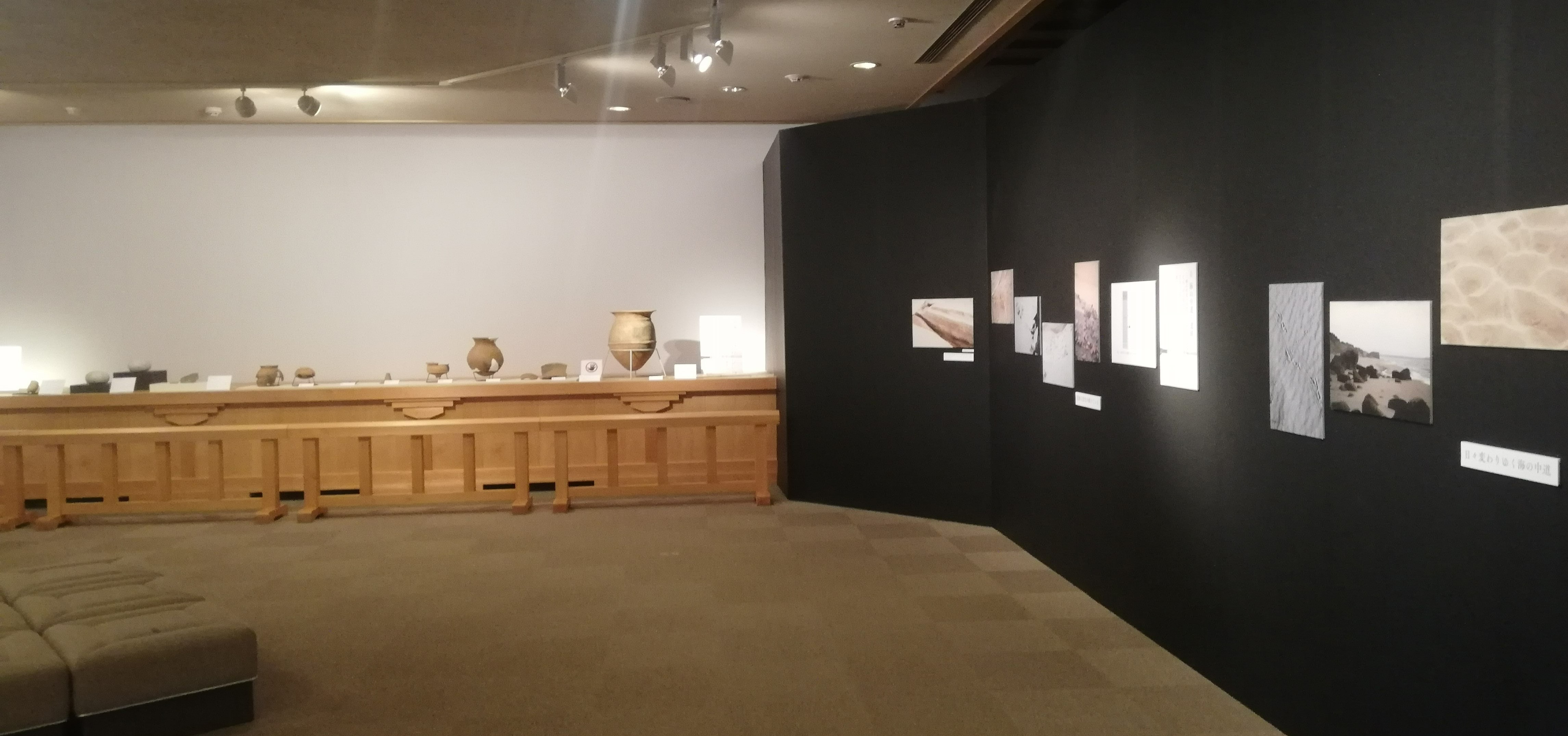
While most ruins in Japan are underground, the Nata Dune B Ruin, located in the middle of Uminonakamichi in Higashi Ward of Fukuoka City, is a rare site that is partially exposed above ground and can be observed in its original state.
Because the ruin faces the Genkai Sea, it is affected by crashing waves and winds, and the topography of the site changes rapidly.
The area around the ruin is constantly changing as the sand is scraped away and deposited again. What has been found at the Nata Dune B Ruin are paleolithic tools from around 20,000 years ago and earthenware from around 1,800 years ago.
If you walk along the coast near the ruins, you can feel the strength and intensity of the wind and waves. But what kind of environment did Uminonakamichi have all those years ago, and how did people live there?
In this exhibition, we will look back at the changes in nature beyond the power of humans to control through photographs, as well as introducing materials collected during excavation of the site.
2022年7月7日木曜日
【Discover the Feature Exhibition】The Beauty and Technique of Handicraft 2 -Magemono
The Hakata Traditional Craft Museum and the Fukuoka City Museum Collaboration Project: The Beauty and Technique of Handicraft 2 -Magemono
Feature Exhibition Room 4
June 14th (Tue.) ~ August 15th (Mon.), 2022

Small dining table called ‘Poppo-zen’
Magemono are wooden containers made by boiling boards of cypress or cedar, bending the planks while they are still hot, and then binding the edges of the planks together with cherry bark.
Akita, Tochigi, and Nara prefectures are well known for of production of Magemono. In Fukuoka, they are mainly produced in Maedashi in Higashi Ward and they are called ‘Hakata Magemono.’ Hakata Magemono are made from straight-grained timbers without knots which are used without lacquer or any other coating. The beauty of the straight grain of the wood is one of its notable characteristics.
Since ancient times in the town around Hakozaki Shrine in Maidashi, Magemono were used to deliver ritual items to make offerings in Shinto rites. The products gradually became more popular and more widely used as common people began to use similar manufacturing methods to make rice boxes, Sushi Oke (wooden bowls for sushi rice), and other daily items.
Among these magemono is the ‘Poppo-zen,’ which is small dining table. This table has a pine-bamboo-apricot design, a combination called Sho-chiku-bai, symbolizing happiness, and ‘the crane and the turtle,’ which symbolize longevity. These patterns are painted with a color wash. Poppo-zen are used in various rituals in young children's lives, such as ‘Okuizome’ (the weaning ceremony) , or ‘Ozen-zuwari’ in which three-year-old children are given their first adult meal and begin eating with chopsticks.
In this exhibition, we will introduce Magemono products that have been, and are still, used in various aspects of daily life.

2022年7月4日月曜日
【Discover the Feature Exhibition】 War and Way of Living 31
Feature Exhibition Room 1
June 14th (Tue.) ~ August 21st (Sun.), 2022

On June 19th 1945, a large formation of B-29 long-range bomber planes from the United States flew over Fukuoka. Here they dropped a large number of incendiary bombs, between midnight and the early morning hours. This is known as the ‘Great Fukuoka Air Raid,’ which left the central part of the city as burnt-out ruins.
Since 1991, the Fukuoka City Museum has held this annual series exhibitions, ’War and Way of Living, ’ annually to commemorate the 'Great Fukuoka Air Raid.’ This year, we will introduce you to military mail, including letters and comfort items.
During the war, ‘home front citizens,’ who did not directly participate in the war, were incorporated into the war support system. The mail sent between the war front and the home front was called ‘military mail’ to distinguish it from ‘general mail.’ Military mail played a connecting role between the war front and the home front in that those involved could stay in touch with one another.
We hope that through the focus on the gathered military mail in this exhibition, you will use the opportunity to learn about this period of the war and how it affected those involved. We also hope this will be an opportunity for you to reflect on the importance of peace.

2022年6月30日木曜日
【Discover the Feature Exhibition】 Hakata Gion Yamakasa Exhibition 21
Feature Exhibition Room 2
June 21st (Tue.) ~ August 28th (Sun.), 2022
.jpg)
Hakata Gion Yamakasa is a festival dedicated to Kushida Shrine, Hakata ward, in Fukuoka City, and it is held between July 1st and 15th every year. During the festival, the tall decorated floats, the Kazariyama, are put on display at several places around the city, while men and boys run through the streets in Hakata carrying the shorter, more portable floats, called Kakiyama.
However, most of the events of this festival have had to be postponed over the last two years because of the pandemic, and last year only some Kazariyama could be displayed. But, this year preparations are underway to make Hakata Gion Yamakasa happen as usual.
The Fukuoka City Museum holds the ‘Hakata Gion Yamakasa Exhibition’ almost every year during the period of the festival. In what will be the 21st year of our annual Hakata Gion Yamakasa exhibition, we will be showcasing Yamakasa-zu, which are pictures depicting the decorative Yamakasa floats. These take the form of hanging scrolls and folding screens dating from the middle of the Edo period to the end of the Tokugawa shogunate (from the 18th century to the middle of the 19th century).
Though these artefacts, we will introduce the festivities as they were celebrated at that time, and what kind of subjects and themes were chosen for decorations for Yamakasa floats during the Edo period.

2022年5月17日火曜日
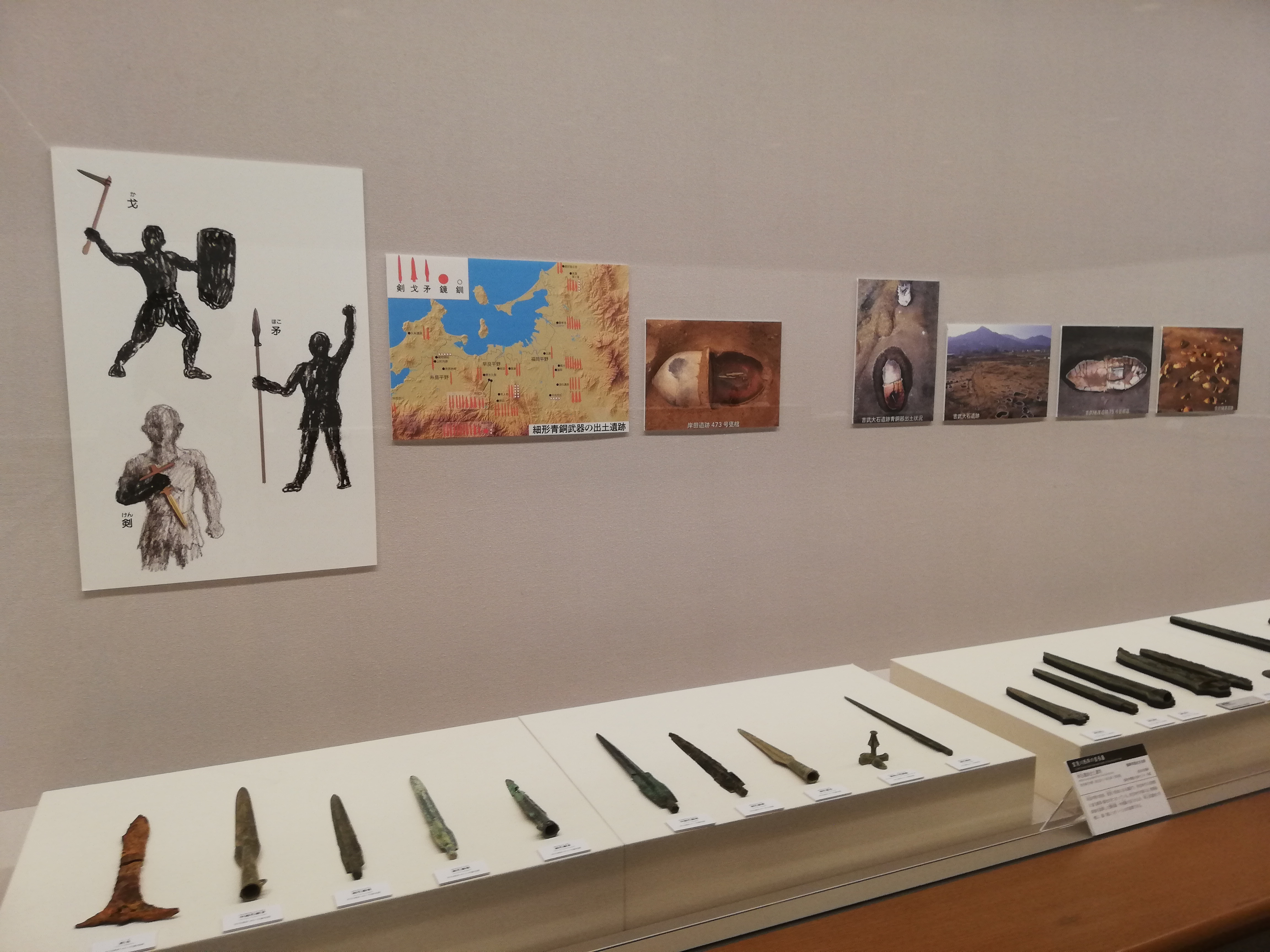
【Discover the Feature Exhibition】 Bronzeware in Fukuoka Exhibition
Feature Exhibition Room 4
April 19th (Tue.) ~ June 12th (Sun.), 2022
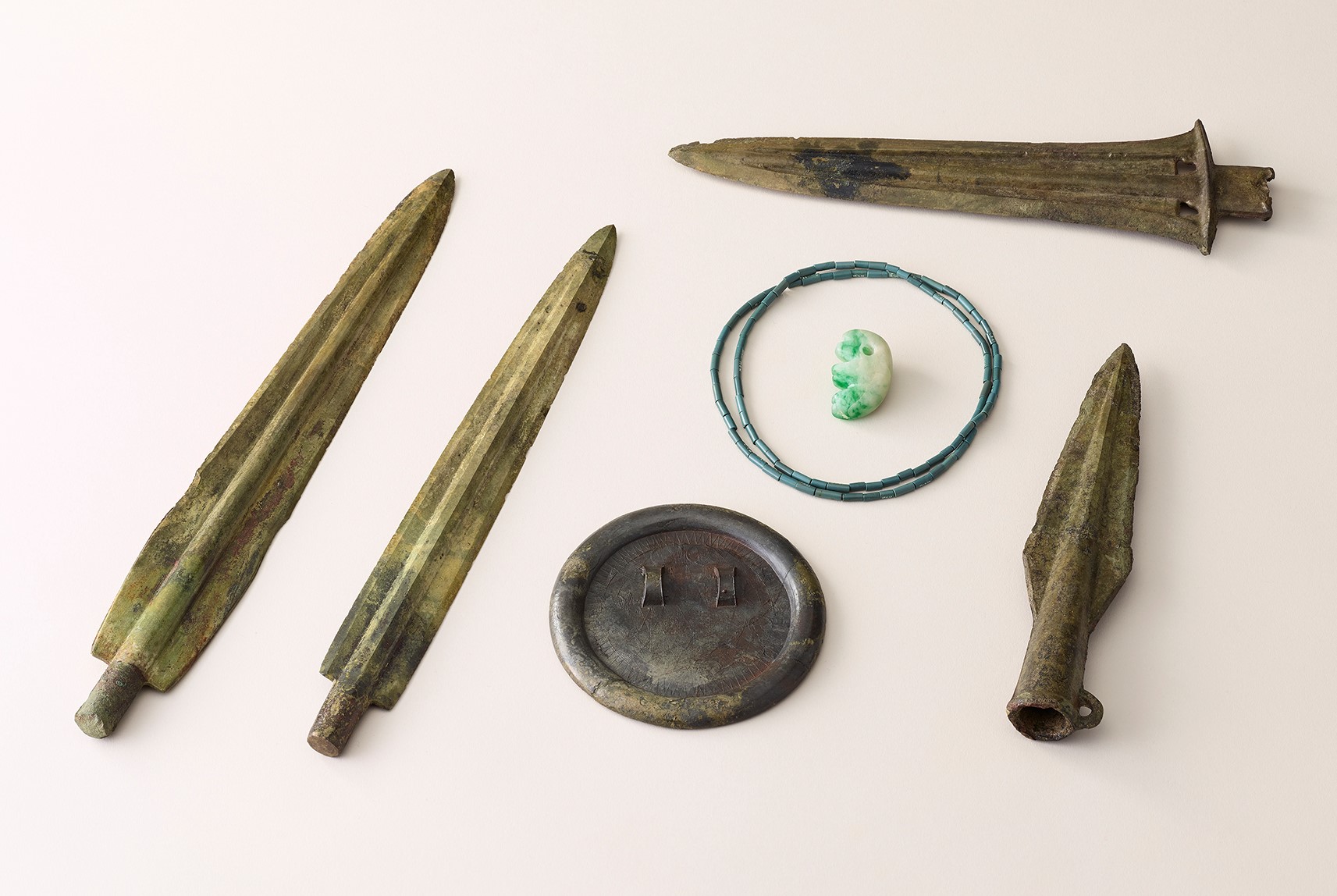
Grave goods excavated from the Yoshitake-Takgagi site
One of the things that characterizes the Yayoi period (c.800 BCE – 250 CE) is the bronzeware. Fukuoka boasts one of the largest quantities of bronzeware excavated in Japan.
Bronzeware was introduced to the Japanese archipelago, initially in very small quantities, not too long after the introduction of rice cultivation.
Then, in the second and third centuries BCE, it was fully introduced to the Japanese archipelago.
Much of the bronze introduced to Japan was used for making weapons, such as bronze spearheads, daggers, and halberds. First, these were made in the Korean peninsula, but it soon became possible to manufacture these artifacts in Japan.
After the first century BCE, the amount of bronzeware brought from China, such as mirrors and coins, began to increase. Various kind of bronzeware was also produced in Japan including Tomoe-shaped bronzeware, which were unique to Japan.
This exhibition brings together a collection of bronzeware produced during the Yayoi period and excavated in Fukuoka. As well as the fascinating bronze items currently on display in the Feature Exhibition Room, we hope you will take the time to enjoy the exhibits on display in the Permanent Exhibition Room.