2022年3月31日木曜日
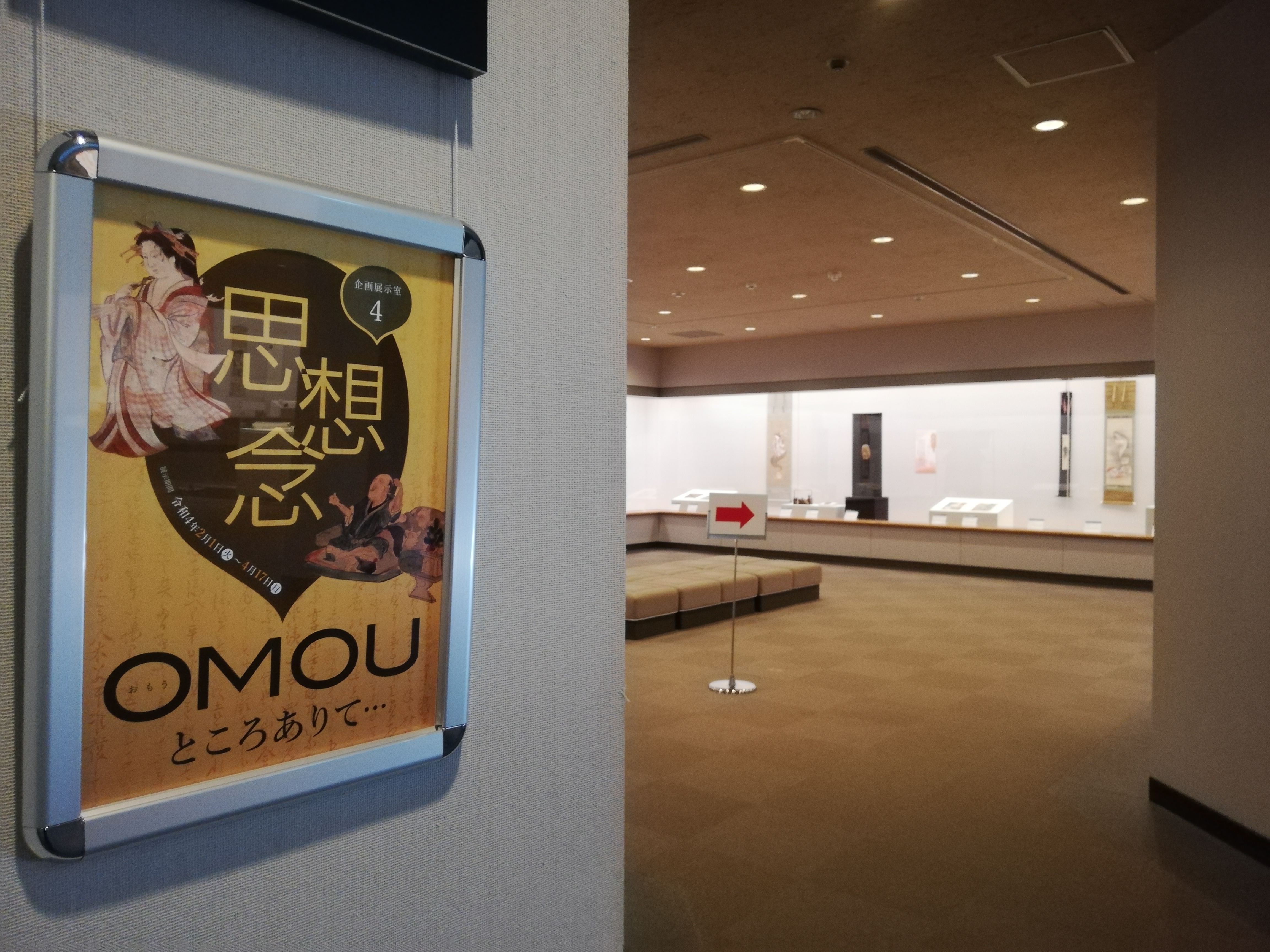
【Discover the Feature Exhibition】OMOU(思・想・念)
―Thinking about something…―
Feature Exhibition Room 4,
February 1st (Tue.) ~ April 17th (Sun.), 2022
We live our Lives thinking about many things. When we think about it, we realize that the word ”Omou(思う)or "think" has many different meanings, and we have many different kinds of thoughts in our minds.
For example, to picture a person you love : “Omoi (想い)”, or to keep the sorrow of parting from your loved ones in your heart forever : “Omoi (懐い)”. These have the same sounds, but different Kanji characters, and slightly different meanings.
There are many more forms of "Omoi".
In contrast to the tranquil thoughts of everyday life: “Omoi(思い)”, there are also more powerful thoughts about extraordinary things: “Omoi (念い) ".

It can also have social meaning, like "pray", or "hope" for something, or even promise. For example, in agriculture and fishing we pray for a bountiful harvest with single-minded devotion. Also, thoughts that connect us to places beyond our human understanding are essential for our community life : “Omoi (推い) ”.
“Omoi” can also be the simple thought of someone else in our everyday lives. It is also “Omoi” to care about the future of our children, and to reminisce about our departed parents. All of these forms of "Omoi" mean that we move freely through time into the past, present or the future in our thoughts. Thanks to the thoughts that persist constantly in our minds: “Omoi (意い) ” , we have the power to live in this world, respond immediately to anything in it.
Yes, we all live our lives with a variety of thoughts and feelings, and all of these are "Omoi."
2022年3月12日土曜日
【Discover the Feature Exhibition】 The Story of Iron
- Thinking about history through iron -
Feature Exhibition Room 3,
February 1st (Tue.) ~ April 3rd (Sun.), 2022
The materials that Mr. Fukae left to us included a large number ofrelics called “Tessai” (or iron slag).
Why did Mr. Fukae collect iron slag, which was just waste iron for the people of that historical era? When was the iron slag produced? When did people in Fukuoka start making iron? How did the production and use of iron, now so common in our lives, spread?
In this exhibition, we will make use of these materials as a guide to explore the history of iron in Fukuoka.
2022年3月7日月曜日
【Discover the Feature Exhibition】 Four Noble Ones
-Magnificent and traditional paintings of plants and flowers-
Feature Exhibition Room 2,
February 1st (Tue.) ~ April 10th (Sun.), 2022
“Four Noble Ones” (or four plants that symbolize a wise man) have been painted primarily in Japan, China and Korea since ancient times. The four subjects of the paintings are orchids, bamboo, plum blossoms and chrysanthemums. The reason why these plants have traditionally been painted is that the qualities of each plant are associated with the ideal person who combines virtue, intelligence, and civility. For example, the flower of the orchid has a subtly elegant scent; the bamboo is straight and has a purity that does not break in the wind; the plum blossom has an innocence that can endure a harsh frost; and the chrysanthemum has the strength and vitality to bloom beautifully in late autumn.
"Four Noble Ones" were embraced by painters, poets and the literati in Japan during the Edo Period because of their longing for Chinese culture. Kamei Shokin (1798-1858), a grandson of the well-known Kamei Nanmei, also left excellent works in Chikuzen, Fukuoka. Moreover, beginners who are learning to paint have a fascination for the four subjects of the paintings, so these works were also produced by many feudal lords who loved painting.
In this exhibition, we will be showcasing the paintings depicting “Four Noble Ones” and its world of noble beauty.
2022年3月3日木曜日
【Discover the Feature Exhibition】 See and Admire the Mounts of Paintings
-For people who love paintings, fabric and paper design-
Feature Exhibition Room 1,
February 1st (Tue.) ~ April 3rd (Sun.), 2022
The delight of seeing art works is enhanced if you look around the actual painting. For example, the wall that the painting is hung on, the arrangement of the room, the season, the time of day… There are countless factors that affect how we see and enjoy paintings. One of the splendors of Japanese art lies in its organic relationship with its surroundings. We cannot explain everything about it in the exhibition room, but we will focus on the mounts of paintings as an introduction.
A mount is a structure to reinforce, display, and store paintings - And at the same time it also plays a role in decoration and solemnity. Unlike the paintings themselves, which are taken care of as a valuable cultural resource, the mountings are less likely to be inserted in a pictorial record or database (For that reason, to be honest, it takes time and effort to prepare the exhibition.).
We hope to introduce to you a little bit of a different way to enjoy Japanese art. Please notice the unique mounts as well as the various colors of “Kire”, which are the fabrics used for the mounts.
2022年1月5日水曜日
今年の正月はとらじゃった
新年あけましておめでとうございます。
令和4(2022)年の干支は寅。
常設展示室内では、新春特設展示として、福岡市博物館が所蔵する「とら」にちなんだ資料を展示しています(2月6日(日)までの予定)。
そのうちの1点。
かわいらしい虎の絵が描かれた色紙には、こう記されています。
「若いくさ 今年の正月は とらじゃった」
これは、五七五の句形をとった「博多にわか(一口にわか)」のオチなのですが、意味がわかりますか?
※「博多にわか」とは?半面を着け、博多弁で会話し、会話の後に地口のオチをつけて、話を決着させるもの。日常生活や世相を反映させたものや温かいユーモアに包まれた内容のものがあります。(博多仁和加振興会事務局HP より)
「こんなの、解説するほうが野暮だよ」という学芸課長のお言葉ですが、
博多にわかに親しんで育ったわけではない県外出身の私にとっては難解・・・
私と同じように「意味がわからない」というあなたに、こっそり教えますね。
標準語になおすと・・・
そりゃわかいよ 今年の正月は (歳を)とらなかったからね
となります。
「とら」に干支の「寅」と、歳を「とら」ないをかけています。
また、昔は誕生日ごとに歳をとるわけではなく、お正月が来たらみんな一歳ずつ歳をとっていた(いわゆる数え年ですね)、という背景もあるんですね。
なるほど~!!
あ、よかった。すっきりしましたか?
この他にも普段は見られない「とら」に関する資料を展示していますので、是非、福岡市博物館へお越しくださいませ。(FUK)
※今回紹介した資料は、「色紙「にわか 若いくさ 今年の正月は とらじゃった」」田中龍一資料(追加分)2008P3307です。
2021年12月14日火曜日
福岡の歴史を象徴する金印と元寇防塁
シリーズ最終話(といっても3回だけですが)は、きわめてお堅い話です。
金印が最初に国指定文化財に指定されたのが、昭和6年、国宝保存法によってです。
昭和6年と言えば、日本国内は政党政治まっさかりの時ですが、中国東北地方において、満州事変が勃発した年です。翌昭和7年には五・一五事件が起こります。軍靴の響きが次第に大きくなっていく頃です。
この昭和6年に、博多湾岸にある元寇防塁が国の史跡指定を受けました。元寇防塁の史跡指定には「国威発揚」という時代的な背景もありそうですが、福岡の歴史を象徴する「金印」と「元寇防塁」が同じ年に指定されていることは、大変意義深いものがあります。
さて、金印が昭和6年に国宝に指定された時の説明書(文部省)を見てみましょう。
「この金印は天明四年二月二十三日筑前志賀島から発見されたと伝えらるるものである。これを作法の上からみると印文白字の態正しく彫法鋭く蛇鈕の形にも古体を窺うべく、蛇体に施されたる斑文にも力ある技法を示して居る。なほ印に関しては漢代の制に蛮夷は蛇、其の字は白文とあることとも一致している。惟ふにこれは印文並に製作等によって漢代の作と認められるもので、我国古代に於ける大陸交渉の徴証となるべき重要なる遺品である。」(カタカナはひらがなに、旧字体は新字体にあらためた。)
この説明書きを読むと、金印の形態・印文等を正確にとらえ、この金印は「蛮夷」印であると言い切っています。「蛮夷」とは、当時の中国「漢」からみて、野蛮な国、というほどの意味ですが、最初に述べたような時代的な背景にも関わらず、文部省は金印の持つ意味を正確に記述していると言えそうです。
昭和6年に国宝に指定された「金印」、国史跡に指定された「元寇防塁」、ともに歴史の証人として、福岡の歴史のシンボルとして今後も輝き続けることでしょう。
江戸時代以来、金印を保護してきた紫檀製の箱や、上記の文章を記載した「文部省の指定理由説明書」などを、常設展示室で初公開中(12月26日まで)です。
年内の開館も12月26日(日)までです。年明けは1月5日(水)からの開館です。
令和4年も、福岡市博物館をよろしくお願いします。
(学芸課 米倉)
2021年12月9日木曜日
緊張の瞬間~金印の取り扱い~
福岡市博物館では現在、NHK福岡放送局が金印を8Kカメラで撮影し、制作した『国宝へようこそプチ「漢委奴國王」金印』を8Kモニターで上映中です。また、これに合わせ、常設展示室にてミニ企画展示『「金印」旧国宝指定90年』を開催中。この期間中、本ブログでは金印にまつわるちょっとしたお話を紹介していきます。
~~~~~~~~~~~~~~~~~~~~~~~~~~~~~~~~~~~~~~~~~~~~~~
福岡市博物館で金印のことを担当していると、お客様から「本物の金印に触ってみたい。」というお話を聞くことがよくあります。そんなとき、私たちは心の中で「いやいや、金印を触るのって、ものすごい精神的ストレスですから!!」と言いたくなる。今日はそんなお話です。
国宝 金印「漢委奴國王」は、平成2年の福岡市博物館の開館以来、常設展示室の目玉のひとつとして展示されてきました。数年に一度、他館に貸し出すとき以外は基本的に本物を展示しており、動かすことは稀ですが、調査や撮影などの際に動かさなければならないことがあります。その手順は以下のようになります。
①厳重な警備のスイッチを切る(詳細は秘密です)
②展示ケースを開ける(やはり、詳細は内緒です)
③金印を手で持ち上げ、専用の箱に収納する
(この箱は常設展示内ミニ企画展示『「金印」旧国宝指定90年』で初公開中です!)
④運ぶ
まず緊張するのは持ち上げるとき。息を止め、ゆっくりと持ち上げます。もし落としたり、どこかにぶつけでもしたら、どうなることか……想像したくもありません。高さは2.2㎝で、印面幅は2.3㎝。単独の指定としては最も小さい国宝である金印は、非常に持ちづらく、おまけに見た目よりも重い(金なので)。2000年前の製作時には、ツマミの部分に紫色の帯紐がつけられ、それ無しで持ち上げることなんて想定されていません。しかも、近年はマイクロスコープによる詳細な観察・記録がなされており、少しでも新しい傷がつこうものなら、すぐにわかってしまいます。
さらに、ほぼ純金ということで、意外と傷つきやすい金印。すでにいくつかある目立つ傷のうち、いくつかは弥生時代や江戸時代のおっちょこちょいな人が落としてつけた傷かもしれません。
さて、箱にいれた後も緊張は続きます。運ぶ作業は必ず複数人で行い、箱を持つ人とサポートする人に分かれます。持つ人は箱を両手でしっかりと持ち、絶対に転んではいけません。階段は使いません。絶対エレベーターです。絶対です。作業中もひとときも目が離せません。
そんな感じで、意外と楽しいものではない金印を扱う作業。
最新の8Kカメラは、そんな金印を扱う学芸員の手の緊張まで捉えることができたのか!?
NHK制作『国宝へようこそプチ「漢委奴國王」金印』は、12月26日(日)まで福岡市博物館2階にて、8Kモニターで上映中です。
(学芸課 朝岡)