🔬 Frontline DLBCL Network Meta-Analysis
Updated Bayesian NMA of 7 Phase III RCTs (N=5,463) comparing frontline chemoimmunotherapy regimens for diffuse large B-cell lymphoma.
Project path: projects/dlbcl-frontline-nma/
Background
R-CHOP has been the standard frontline DLBCL treatment for 20+ years, but ~35% of patients relapse. Six novel regimens have been tested against R-CHOP in Phase III trials, yet no head-to-head comparisons exist between them. This NMA establishes a comparative efficacy hierarchy using both Bayesian (gemtc) and frequentist (netmeta) methodology.
Included Trials
| Trial |
Regimen |
N |
PFS HR (95% CI) |
| POLARIX 5y |
Pola-R-CHP |
879 |
0.77 (0.62-0.96) |
| PHOENIX |
Ibrutinib+R-CHOP |
838 |
0.92 (0.71-1.18) |
| ROBUST |
Lenalidomide+R-CHOP |
570 |
0.85 (0.63-1.14) |
| ECOG-E1412 |
Lenalidomide+R-CHOP |
349 |
0.66 (0.43-1.01) |
| REMoDL-B 5y |
Bortezomib+R-CHOP |
918 |
0.81 (approx) |
| GOYA |
G-CHOP |
1,418 |
0.94 (0.78-1.13) |
| CALGB 50303 |
DA-EPOCH-R |
491 |
0.93 (0.68-1.27) |
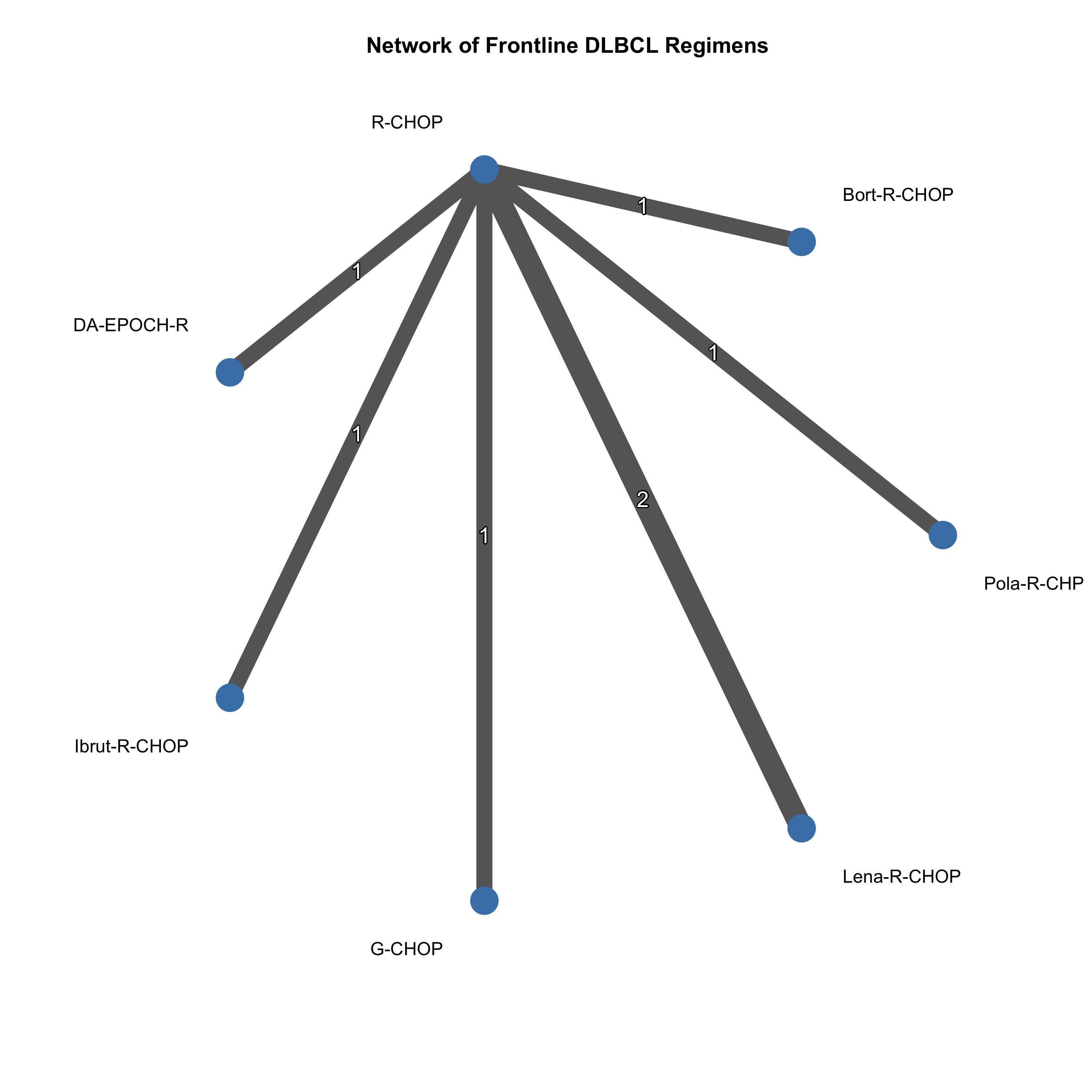
Figure 1: Network Geometry
Network Graph
Star-shaped network with R-CHOP as common comparator. 7 Phase III RCTs, 5,463 patients. Lena+R-CHOP has 2 contributing studies (ROBUST + ECOG-E1412).
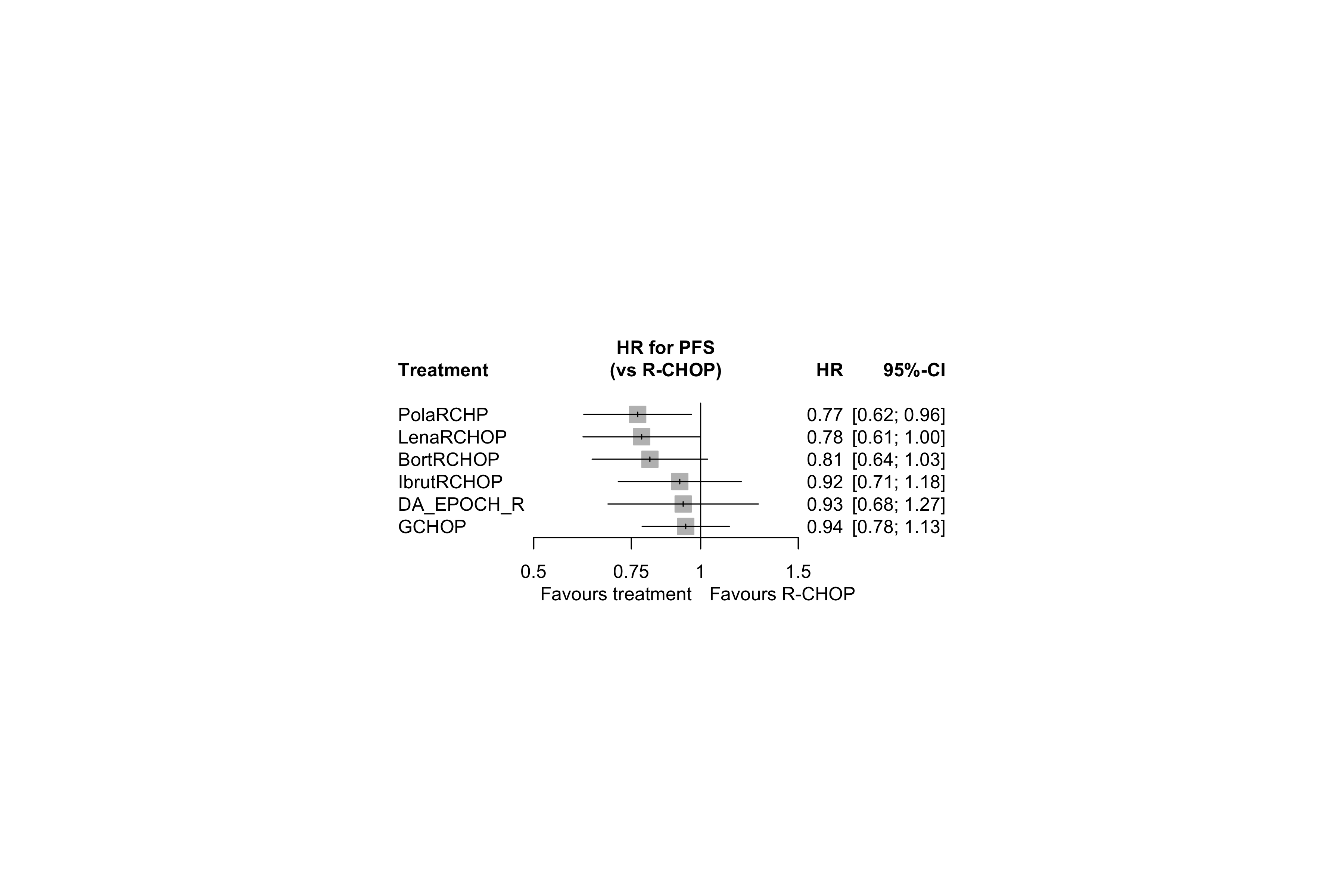
Figure 2: Forest Plot — PFS (Primary Outcome)
Forest Plot PFS
Pola-R-CHP is the only treatment with a statistically significant PFS improvement (HR 0.77, p=0.022). I2=0%, tau2<0.0001.
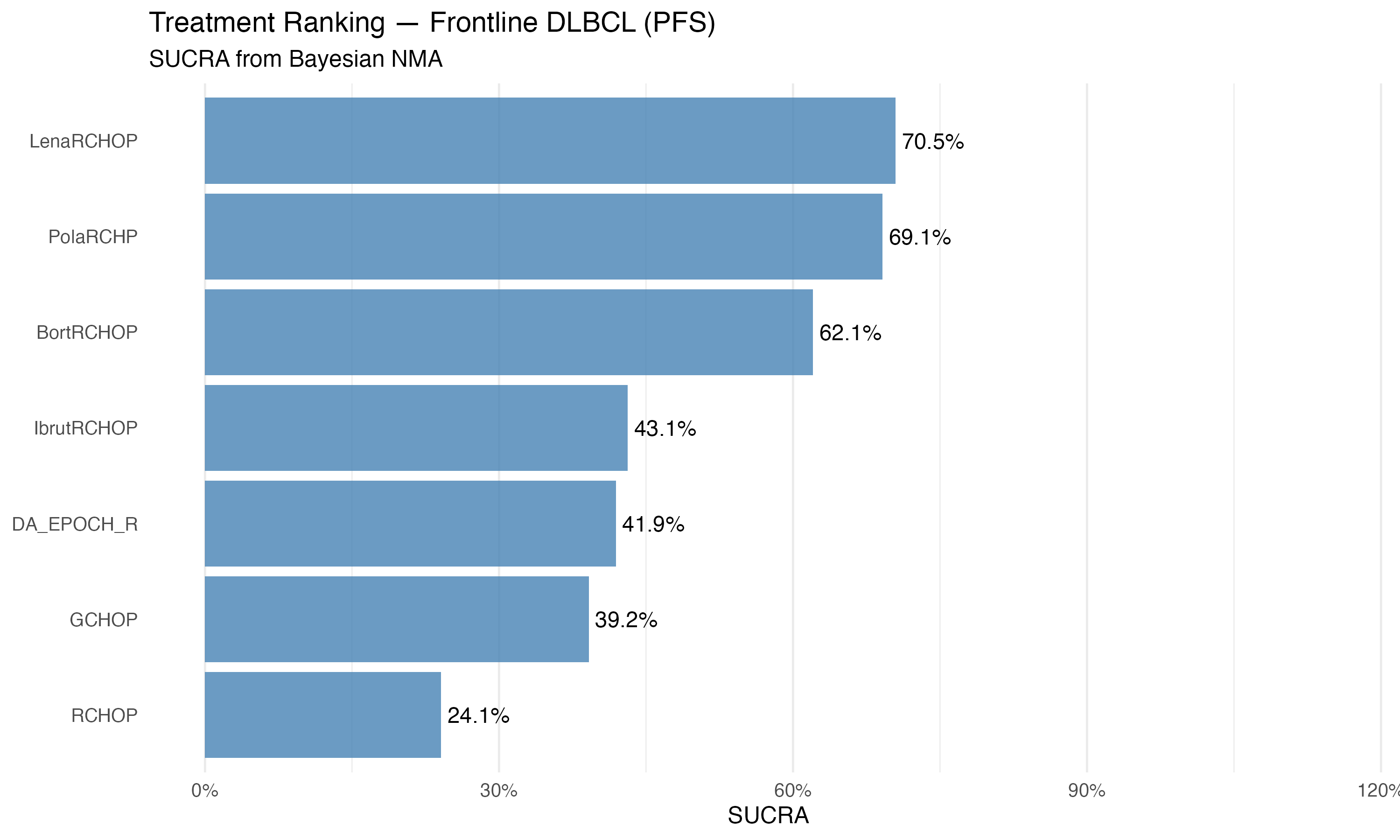
Figure 3: Treatment Rankings (SUCRA)
SUCRA Rankings
| Rank |
Treatment |
SUCRA |
HR vs R-CHOP |
| 1 |
Lena+R-CHOP |
70.5% |
0.78 (0.61-1.00) |
| 2 |
Pola-R-CHP |
69.1% |
0.77 (0.62-0.96) ✓ |
| 3 |
Bort+R-CHOP |
62.1% |
0.81 (0.64-1.03) |
| 4 |
Ibrut+R-CHOP |
43.1% |
0.92 (0.71-1.18) |
| 5 |
DA-EPOCH-R |
41.9% |
0.93 (0.68-1.27) |
| 6 |
G-CHOP |
39.2% |
0.94 (0.78-1.13) |
| 7 |
R-CHOP |
24.1% |
ref |
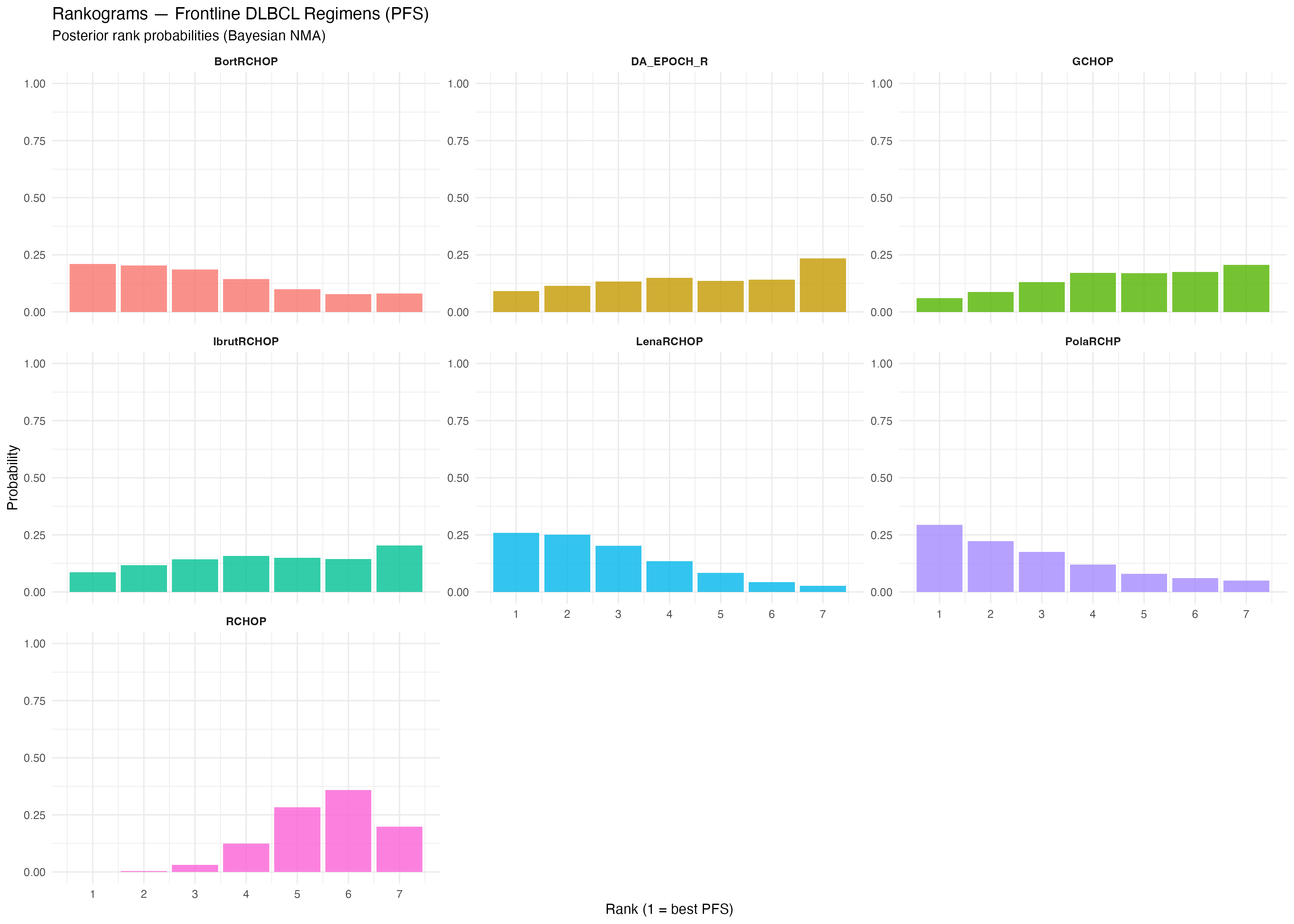
Figure 4: Rankograms
Rankograms
Posterior rank probability distributions from Bayesian NMA. Wide distributions reflect overlapping CIs in the star-shaped network.
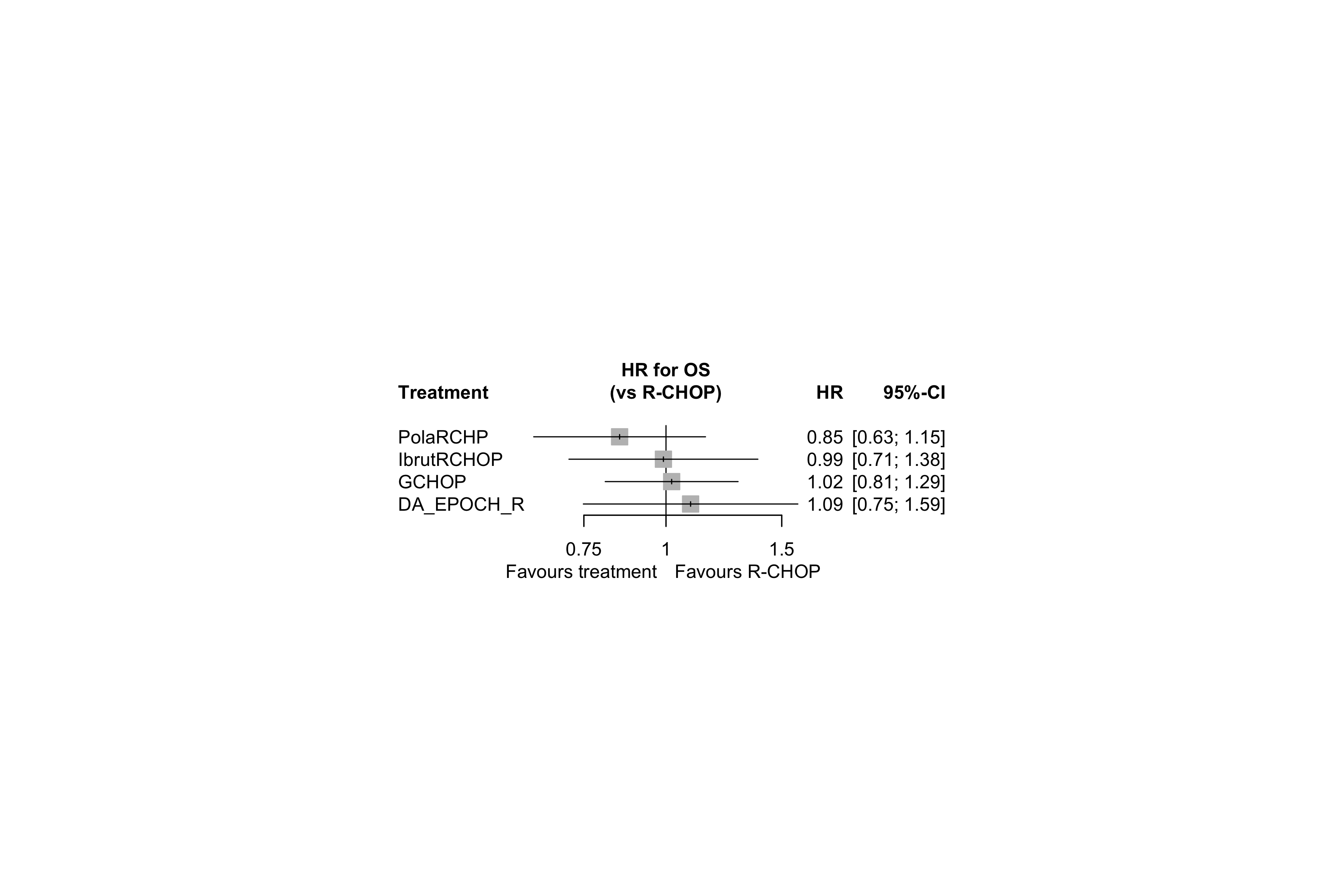
Figure 5: Overall Survival (Secondary Outcome)
OS Forest Plot
No treatment achieved statistically significant OS improvement vs R-CHOP (4 trials with OS data).
Key Findings
- Pola-R-CHP is the only statistically significant winner — supports NCCN Category 1 recommendation for IPI ≥2
- ABC/non-GCB subtype shows consistent benefit across 3 mechanistically distinct agents (Pola HR 0.34, Bort HR 0.65, Lena HR 0.68) — argues for COO-guided therapy
- GCB + low-IPI patients have a ceiling effect with R-CHOP (~77% 5y PFS) — adding drugs doesn't help
- TP53 mutation remains the critical gap — no frontline regimen overcomes it
- PHOENIX age paradox: benefit in <60 (HR 0.56), harm in ≥60 (HR 1.20) — toxicity-driven treatment attrition negates efficacy
Clinical Recommendation Framework
ABC/non-GCB + IPI 3-5 → Pola-R-CHP (Category 1)
ABC/non-GCB + DEL → Pola-R-CHP (HR 0.64)
ABC/non-GCB + Age ≥70 → Pola-R-CHP (HR 0.63)
GCB + IPI 0-2 → R-CHOP sufficient
GCB + IPI 3-5 → No clear winner
TP53 mutant → Unmet need (consider CAR-T, venetoclax)
Methodology
- Primary: Bayesian NMA (gemtc, JAGS) — random-effects consistency model
- Sensitivity: Frequentist NMA (netmeta, REML)
- Convergence: All Rhat = 1.0, Bayesian-frequentist concordance confirmed
- Heterogeneity: I2 = 0%
- Sensitivity analyses: Leave-one-out, ROBUST exclusion, OS NMA, fixed/random comparison
Pipeline
Full end-to-end meta-analysis pipeline:
- 01_protocol → 02_search (PubMed 194 records) → 03_screening (7 RCTs) → 05_extraction → 06_analysis (10 R scripts) → 07_manuscript (~4,800 words + 1,627 word discussion) → 08-09 QA
Comparison with Prior NMA
Updates Chen et al., Ann Hematol 2023:
- ✅ POLARIX 5-year data (they had 2-year)
- ✅ Bayesian methodology (2026 NICE/Cochrane consensus)
- ✅ Subgroup analysis across COO, IPI, DEL, age
- ✅ TP53 gap analysis
Generated with meta-pipe — AI-assisted meta-analysis pipeline
|