Structural and free energy landscape analysis for the discovery of antiviral compounds targeting the cap-binding domain of influenza polymerase PB2
- PMID: 39455591
- PMCID: PMC11512052
- DOI: 10.1038/s41598-024-69816-3
Structural and free energy landscape analysis for the discovery of antiviral compounds targeting the cap-binding domain of influenza polymerase PB2
Erratum in
-
Author Correction: Structural and free energy landscape analysis for the discovery of antiviral compounds targeting the cap‐binding domain of influenza polymerase PB2.Abouzied AS, Alqarni S, Younes KM, Alanazi SM, Alrsheed DM, Alhathal RK, Huwaimel B, Elkashlan AM. Abouzied AS, et al. Sci Rep. 2025 Jan 29;15(1):3691. doi: 10.1038/s41598-025-87888-7. Sci Rep. 2025. PMID: 39880900 Free PMC article. No abstract available.
Abstract
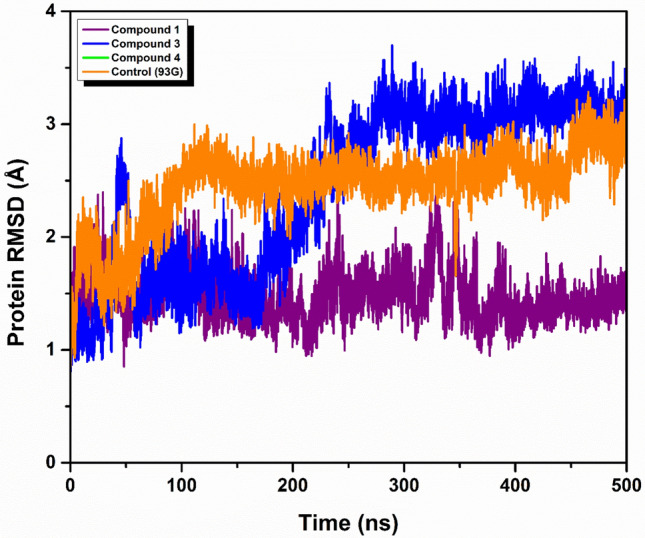
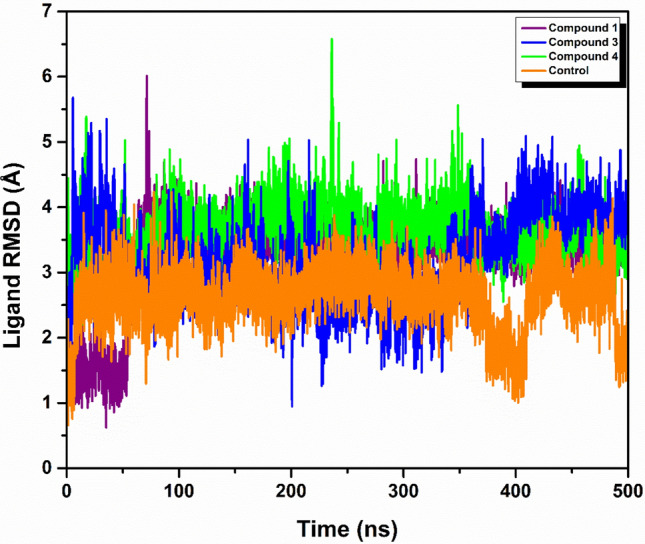
Influenza poses a significant threat to global health, with the ability to cause severe epidemics and pandemics. The polymerase basic protein 2 (PB2) of the influenza virus plays a crucial role in the viral replication process, making the CAP-binding domain of PB2 an attractive target for antiviral drug development. This study aimed to identify and evaluate potential inhibitors of the influenza polymerase PB2 CAP-binding domain using computational drug discovery methods. We employed a comprehensive computational approach involving virtual screening, molecular docking, and 500 ns molecular dynamics (MD) simulations. Compounds were selected from the Diverse lib database and assessed for their binding affinity and stability in interaction with the PB2 CAP-binding domain. The study utilized the generalized amber force field (GAFF) for MD simulations to further evaluate the dynamic behaviour and stability of the interactions. Among the screened compounds, compounds 1, 3, and 4 showed promising binding affinities. Compound 4 demonstrated the highest binding stability and the most favourable free energy profile, indicating strong and consistent interaction with the target domain. Compound 3 displayed moderate stability with dynamic conformational changes, while Compound 1 maintained robust interactions throughout the simulations. Comparative analyses of these compounds against a control compound highlighted their potential efficacy. Compound 4 emerged as the most promising inhibitor, with substantial stability and strong binding affinity to the PB2 CAP-binding domain. These findings suggest that compound 4, along with compounds 1 and 3, holds the potential for further development into effective antiviral agents against influenza. Future studies should focus on experimental validation of these compounds and exploration of resistance mechanisms to enhance their therapeutic utility.
Keywords: Free binding energy; Free energy landscape; Influenza virus; Molecular dynamics simulations; PB2 CAP-binding domain; Virtual screening.
© 2024. The Author(s).
Conflict of interest statement
The authors declare no competing interests.
Figures
References
-
- WHO, Influenza (Seasonal) (2023). https://www.who.int/news-room/fact-sheets/detail/influenza-(seasonal)?ga... (accessed April 21, 2024).
-
- PAHO, Influenza, SARS-CoV-2, RSV and other respiratory viruses, (n.d.). https://www.paho.org/en/topics/influenza-sars-cov-2-rsv-and-other-respir... (accessed April 21, 2024).
-
- Russell, C. J. Orthomyxoviruses: Structure of Antigens☆. In Reference Module in Biomedical Sciences (Elsevier, 2016). 10.1016/B978-0-12-801238-3.95721-0
MeSH terms
Substances
Grants and funding
LinkOut - more resources
Full Text Sources
Miscellaneous