Development of lentil peptides with potent antioxidant, antihypertensive, and antidiabetic activities along with umami taste
- PMID: 37324857
- PMCID: PMC10261806
- DOI: 10.1002/fsn3.3279
Development of lentil peptides with potent antioxidant, antihypertensive, and antidiabetic activities along with umami taste
Abstract
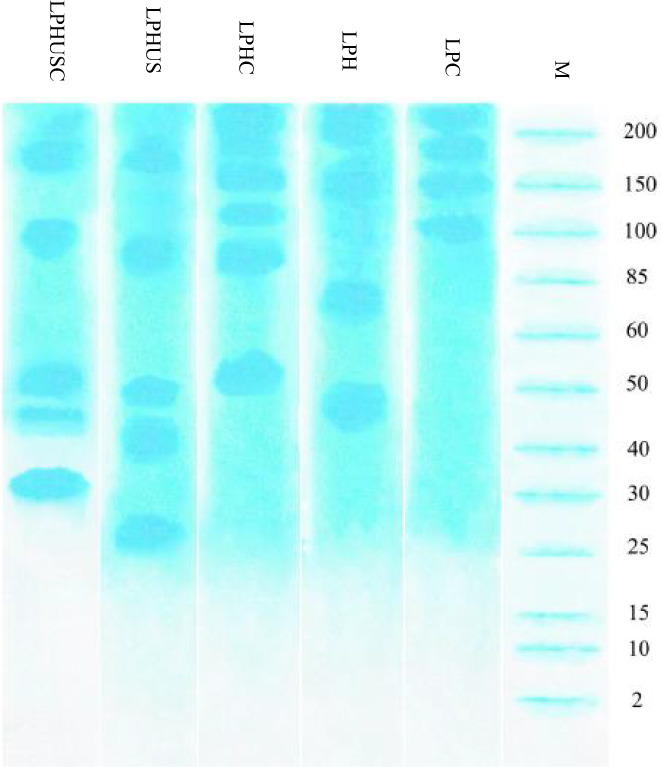
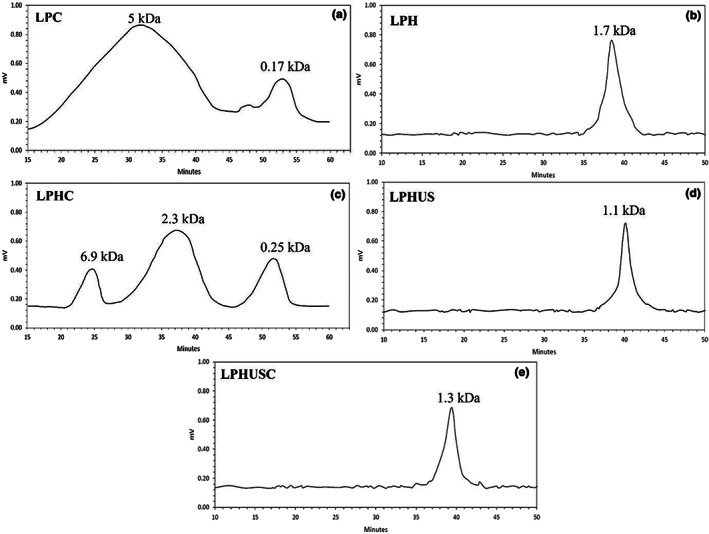
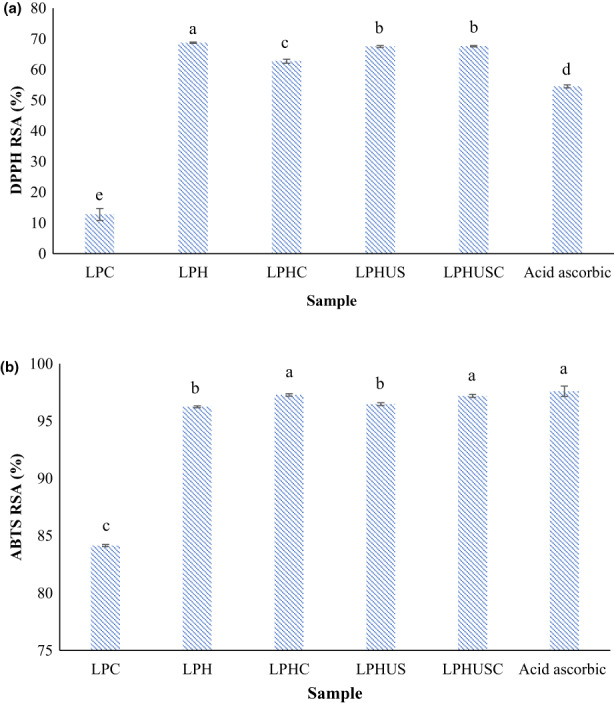
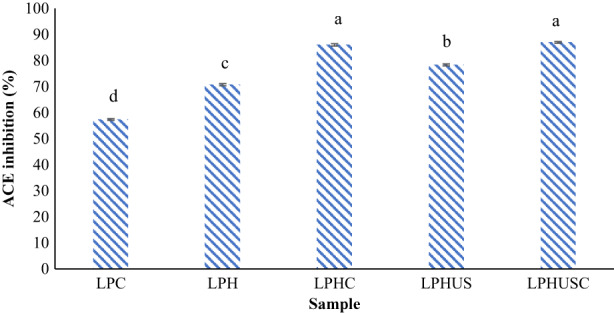
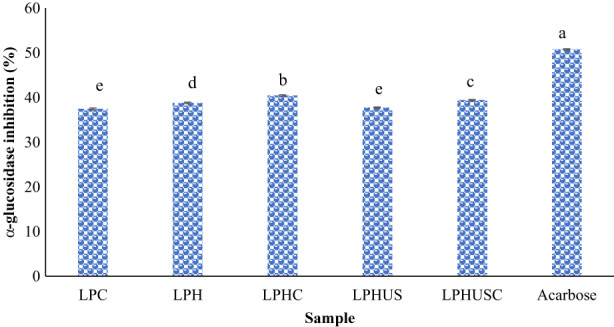
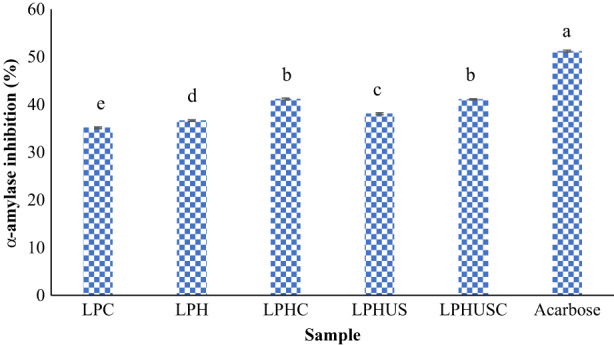
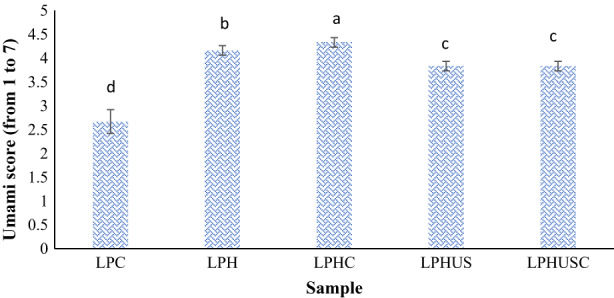
Lentil peptides have shown promising bioactive properties regarding the antioxidant activity and also inhibitory activity of angiotensin-I-converting enzyme (ACE). Sequential hydrolysis of proteins has shown a higher degree of hydrolysis with enhanced antioxidant and ACE-inhibitory activities. The lentil protein concentrate (LPC) was sequentially hydrolyzed using Alcalase and Flavourzyme at 2% w/w. The hydrolysate (LPH) was cross-linked (LPHC) or sonicated (LPHUS) and sequentially cross-linked (LPHUSC). Amino acid profile, molecular weight (MW) distribution, DPPH and ABTS radical scavenging activities (RSA; 7 mg/mL), ACE (0.1-2 mg/mL), α-glucosidase, and α-amylase inhibitory activities (10-500 μg/mL), and umami taste were determined. The highest DPPH RSA was obtained for LPH (68.75%), followed by LPHUSC (67.60%), and LPHUS (67.49%) while the highest ABTS RSA values were obtained for LPHC (97.28%) and LPHUSC (97.20%). Cross-linking and sonication led to the improvement of the ACE-inhibitory activity so that LPHUSC and LPHC had IC50 values of 0.23 and 0.27 mg/mL, respectively. LPHC and LPHUSC also indicated higher α-glucosidase inhibitory activity (IC50 of 1.2 and 1.23 mg/mL) compared to LPH (IC50 of 1.74 mg/mL) and LPHUS (IC50 of 1.75 mg/mL) while the IC50 value of acarbose indicated 0.51 mg/mL. Moreover, LPHC and LPHUSC exhibited higher α-amylase inhibitory activities (IC50 of 1.35 and 1.16 mg/mL) than LPHUS (IC50 of 1.95 mg/mL), and LPH (IC50 of 2.51 mg/mL) while acarbose had an IC50 value of 0.43 mg/mL. Umami taste analysis revealed that LPH and LPHC due to MW of 1.7 and 2.3 kDa and also high umami amino acids could be well considered as representative of meaty and umami analog flavors while indicating stronger antioxidant, antihypertension, and antidiabetic attributes.
Keywords: antioxidant, antihypertension, and antidiabetic activities; cross‐linking and sonication; lentil peptides; umami taste development.
© 2023 The Authors. Food Science & Nutrition published by Wiley Periodicals LLC.
Conflict of interest statement
The authors have declared no conflict of interest.
Figures
References
-
- Akillioǧlu, H. G. , & Karakaya, S. (2009). Effects of heat treatment and in vitro digestion on the angiotensin converting enzyme inhibitory activity of some legume species. European Food Research and Technology, 229(6), 915–921. 10.1007/s00217-009-1133-x - DOI
-
- Ambigaipalan, P. , Al‐Khalifa, A. S. , & Shahidi, F. (2015). Antioxidant and angiotensin I converting enzyme (ACE) inhibitory activities of date seed protein hydrolysates prepared using alcalase, flavourzyme and thermolysin. Journal of Functional Foods, 18, 1125–1137. 10.1016/j.jff.2015年01月02日1 - DOI
-
- Amini Sarteshnizi, R. , Sahari, M. A. , Ahmadi Gavlighi, H. , Regenstein, J. M. , Nikoo, M. , & Udenigwe, C. C. (2021). Influence of fish protein hydrolysate‐pistachio green hull extract interactions on antioxidant activity and inhibition of α‐glucosidase, α‐amylase, and DPP‐IV enzymes. LWT, 142, 111019. 10.1016/J.LWT.2021.111019 - DOI
-
- Arise, R. O. , Idi, J. J. , Mic‐Braimoh, I. M. , Korode, E. , Ahmed, R. N. , & Osemwegie, O. (2019). In vitro Angiotesin‐1‐converting enzyme, α‐amylase and α‐glucosidase inhibitory and antioxidant activities of Luffa cylindrical (L.) M. Roem seed protein hydrolysate. Heliyon, 5(5), e01634. 10.1016/J.HELIYON.2019.E01634 - DOI - PMC - PubMed
-
- Aryee, A. N. A. , & Boye, J. I. (2016). Improving the digestibility of lentil flours and protein isolate and characterization of their enzymatically prepared hydrolysates. International Journal of Food Properties, 19(12), 2649–2665. 10.1080/10942912.2015.1123269 - DOI
LinkOut - more resources
Full Text Sources
Miscellaneous