Editorial
doi: 10.1371/journal.pcbi.1008531.
eCollection 2021 Feb.
Ten simple rules for engaging with artificial intelligence in biomedicine
Avni Malik
1
, Paranjay Patel
2
, Lubaina Ehsan
3
, Shan Guleria
2
, Thomas Hartka
4
, Sodiq Adewole
5
, Sana Syed
3
Affiliations
- PMID: 33571194
- PMCID: PMC7877652
- DOI: 10.1371/journal.pcbi.1008531
Item in Clipboard
Editorial
Ten simple rules for engaging with artificial intelligence in biomedicine
Avni Malik et al.
PLoS Comput Biol.
.
Display options
Format
Display options
Format
No abstract available
Conflict of interest statement
The authors have declared that no competing interests exist.
Figures
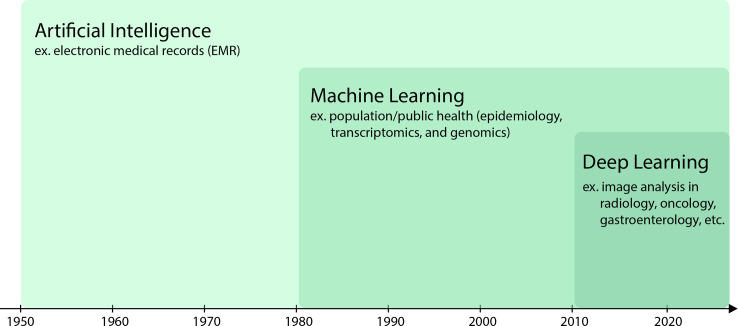
Data analysis techniques have become more advanced over time. The elaboration of artificial intelligence techniques influenced machine learning. Similarly, the sophistication of machine learning prompted evolution into deep learning as shown in this figure adapted from Le Berre and colleagues [13]. Each approach shows an example of its application in the biomedical field.
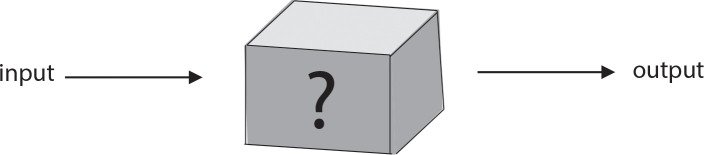
The predictive behaviors of AI models can sometimes be hidden from programmers, who must then view the internal workings as a "black box," analyzing them based on their inputs and outputs.
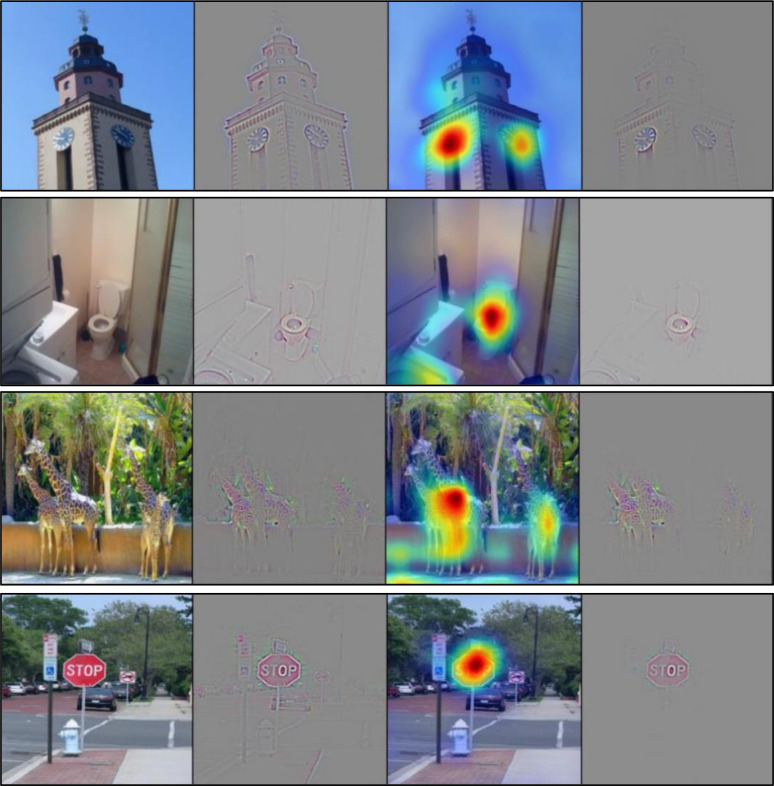
The recognition of objects in images done by Grad-CAMs relies on classification of these objects by programmers. Without the explicit knowledge of what "clocks," "toilets and sinks," giraffes, or "stop signs" are, the programmer would not be able to verify the outputs of the Grad-CAM visualization. Mastery of the topic of interest is crucial in the development of such models [19].
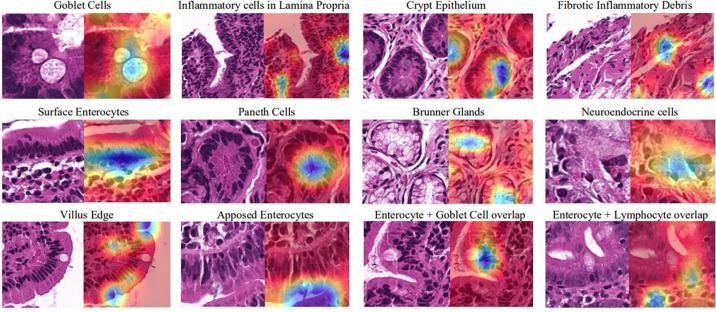
With the help of experts in gastrointestinal tissues, Grad-CAMs can be trained to recognize many different key features (specified by the blue color) in biomedical images to aid with celiac disease classification [20].
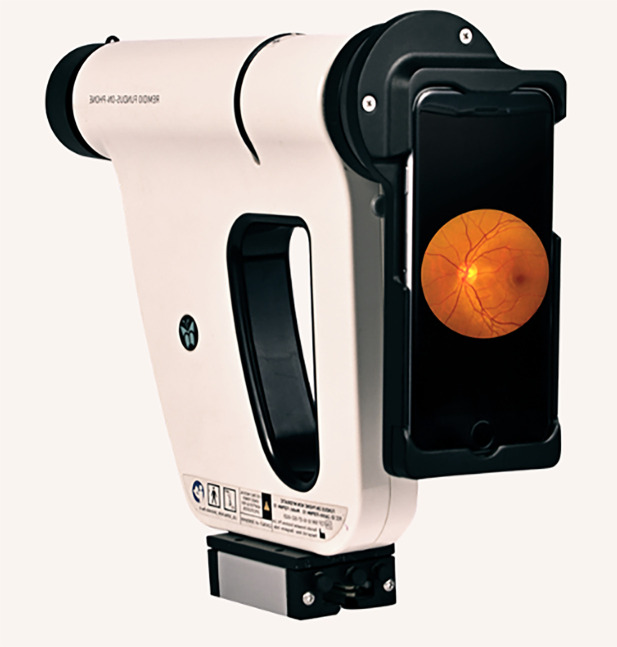
The Remidio "Fundus on Phone" has reformed fundoscopy by creating more accessible and economical technology to optimize healthcare [22].
References
-
- Topol E. Deep medicine: how artificial intelligence can make healthcare human again. New York, New York: Basic Books; 2019.
-
- Smith TM. 10 ways health care AI could transform primary care. American Medical Association; 2020. [cited 2020 May 17]. Available from: https://www.ama-assn.org/practice-management/digital/10-ways-health-care....
-
- Zemouri R, Zerhouni N, Racoceanu D. Deep Learning in the biomedical applications: recent and future status. Appl Sci. 2019. April;9 10.3390/app9081526 - DOI
-
- Nicholson W. Risks and remedies for artificial intelligence in health care. Brookings. Brookings; 2020. [cited 2020 May 17]. Available from: https://www.brookings.edu/research/risks-and-remedies-for-artificial-int....
-
- News Center. Stanford Medicine launches health care trends report. News Center. 2017. [cited 2020 May 17]. Available from: http://med.stanford.edu/news/all-news/2017/06/stanford-medicine-launches....
Publication types
MeSH terms
Grants and funding
LinkOut - more resources
Full Text Sources
Other Literature Sources