Cerebellar modules operate at different frequencies
- PMID: 24843004
- PMCID: PMC4049173
- DOI: 10.7554/eLife.02536
Cerebellar modules operate at different frequencies
Abstract
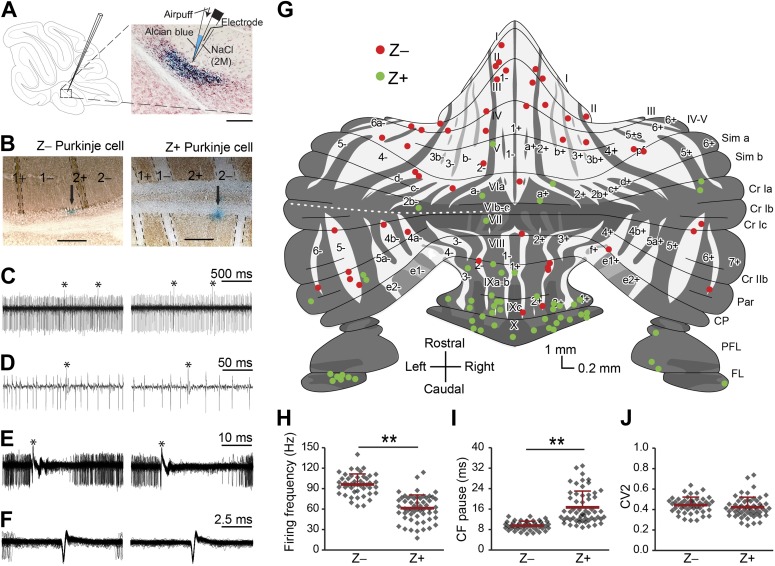
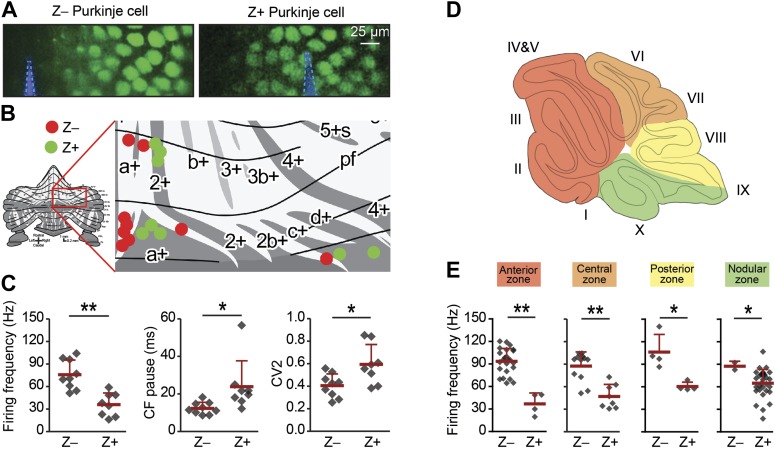
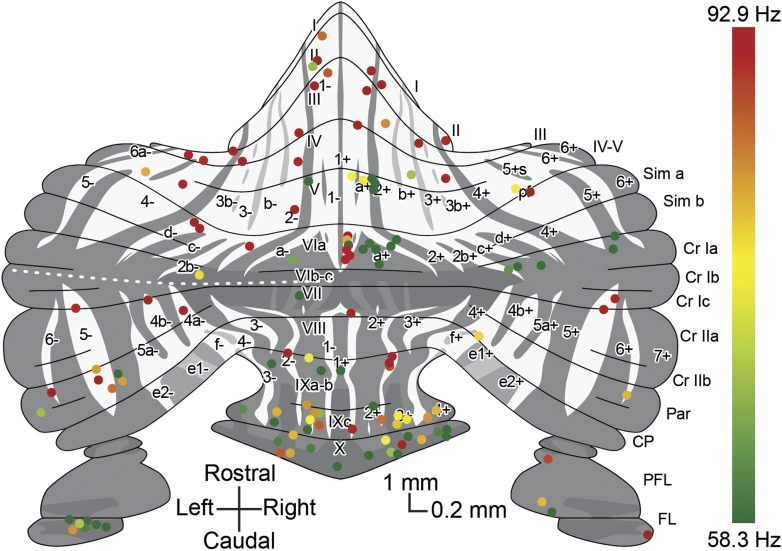
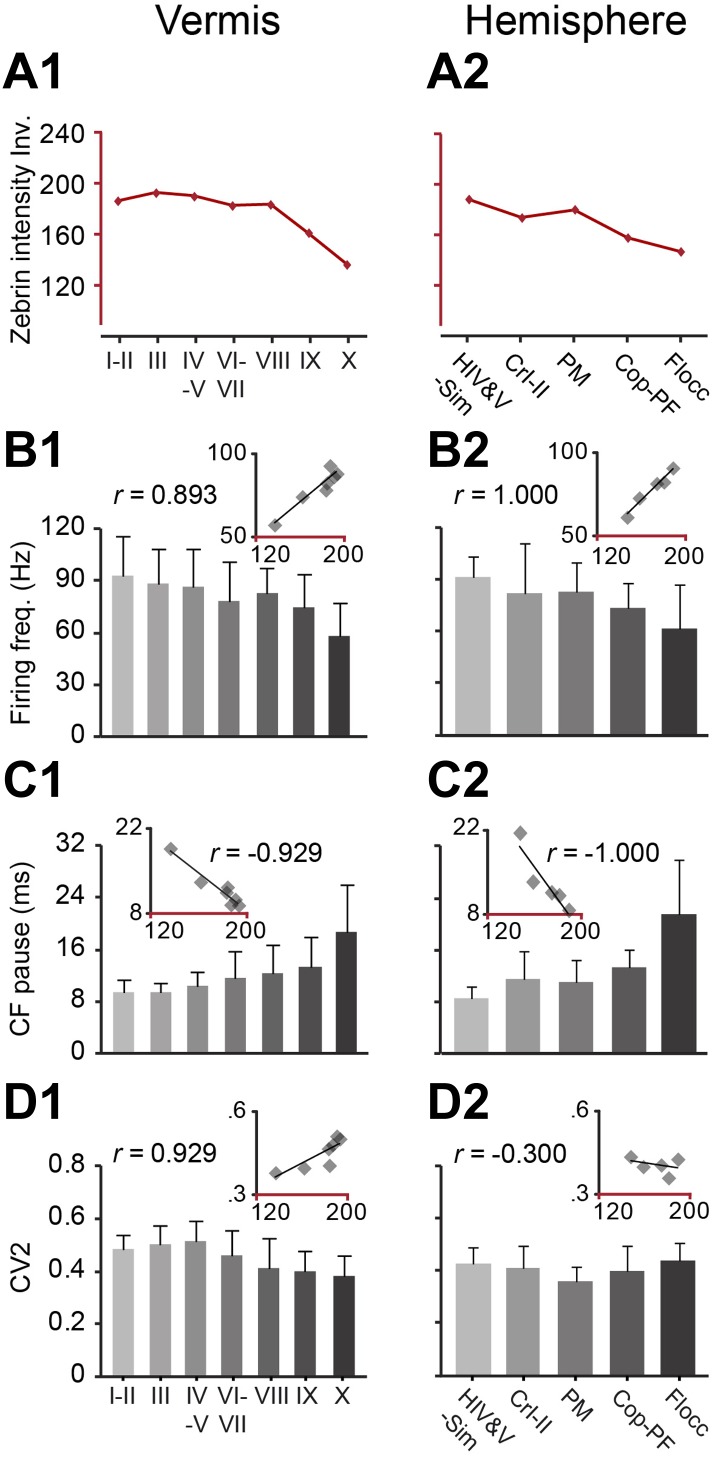
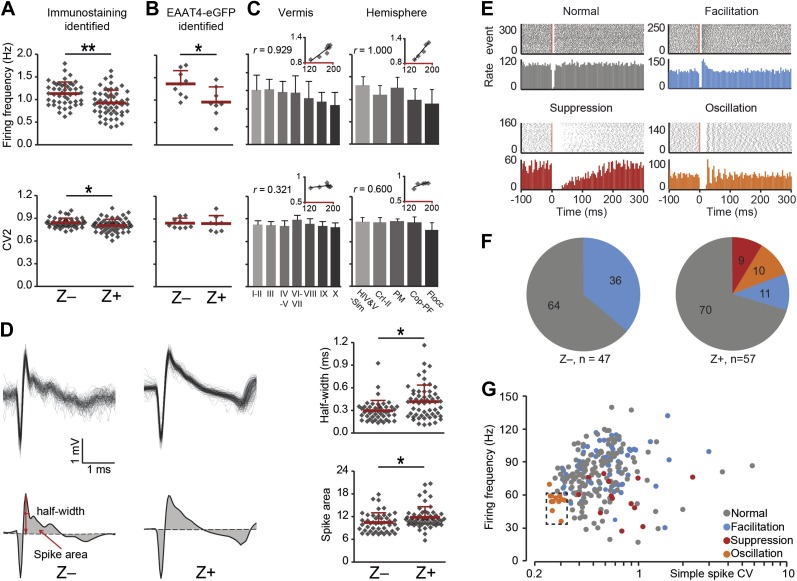
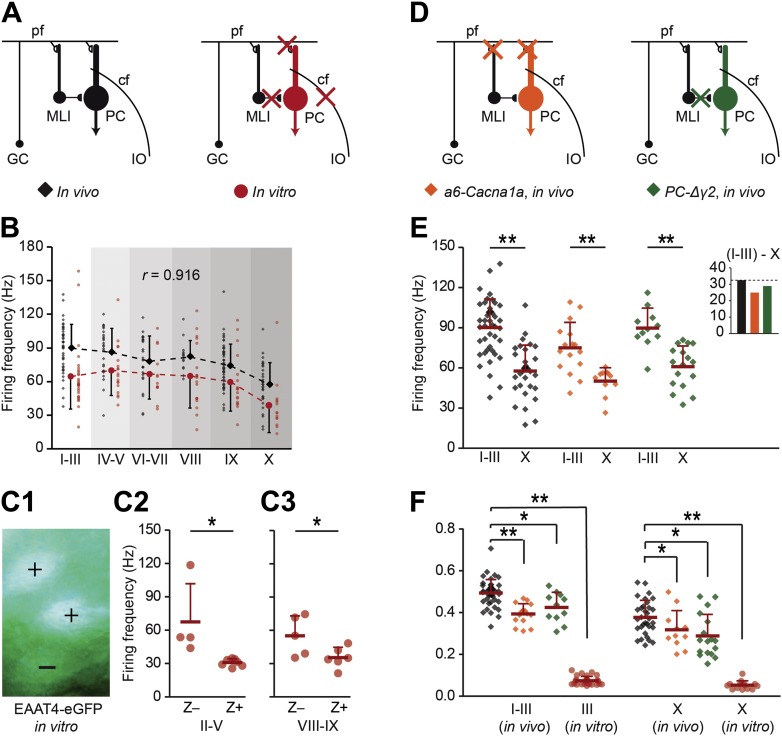
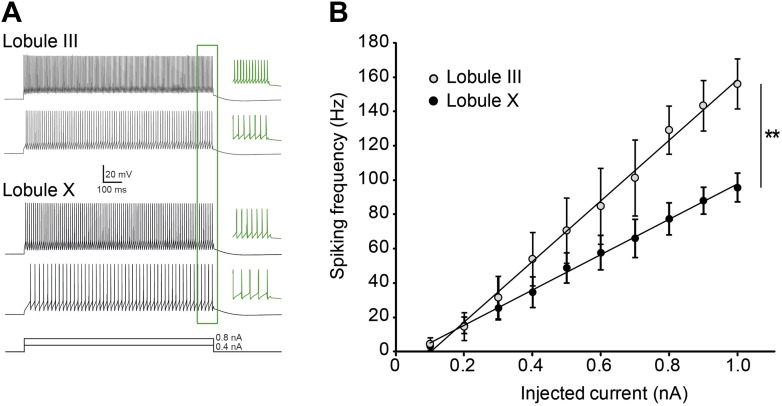
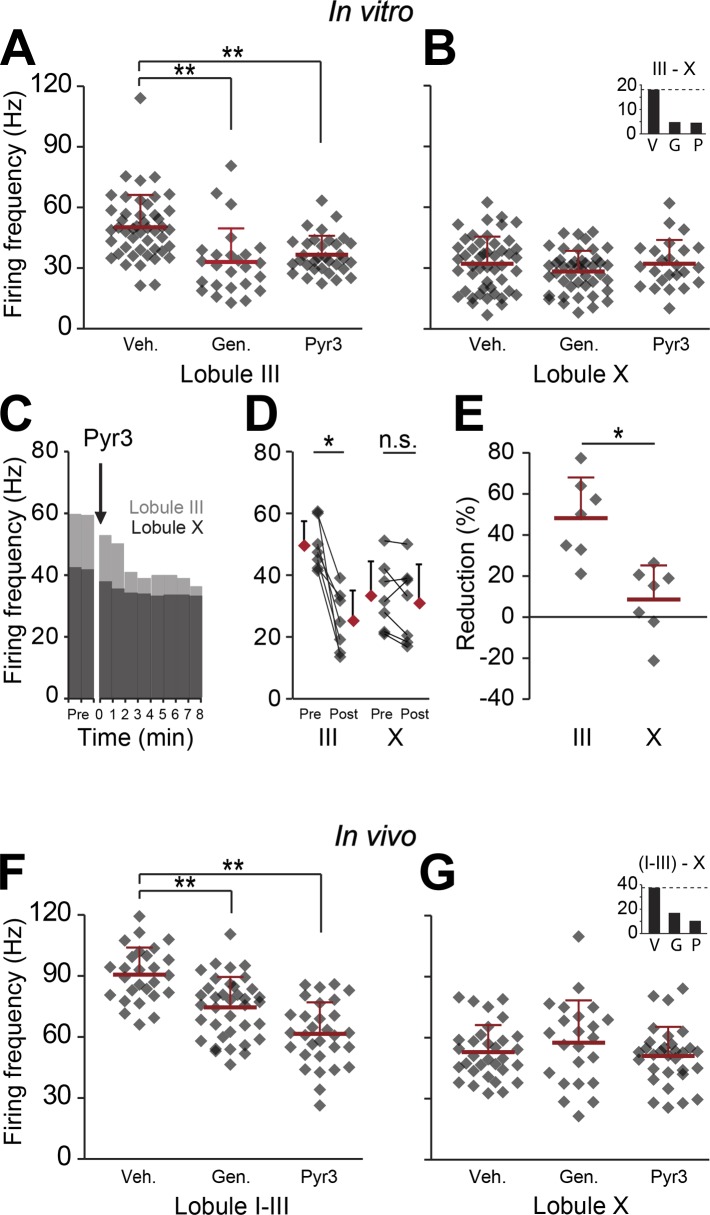
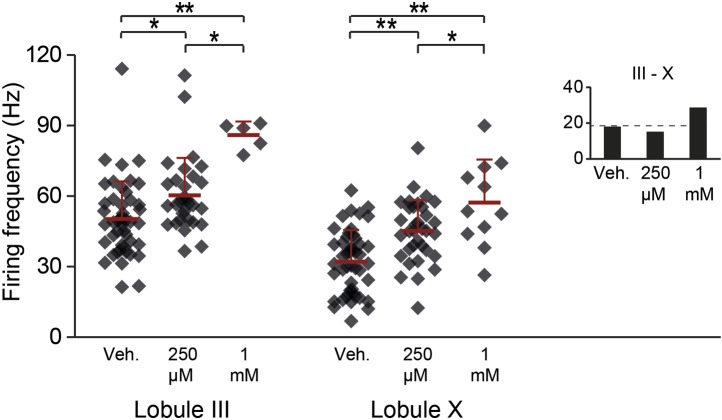
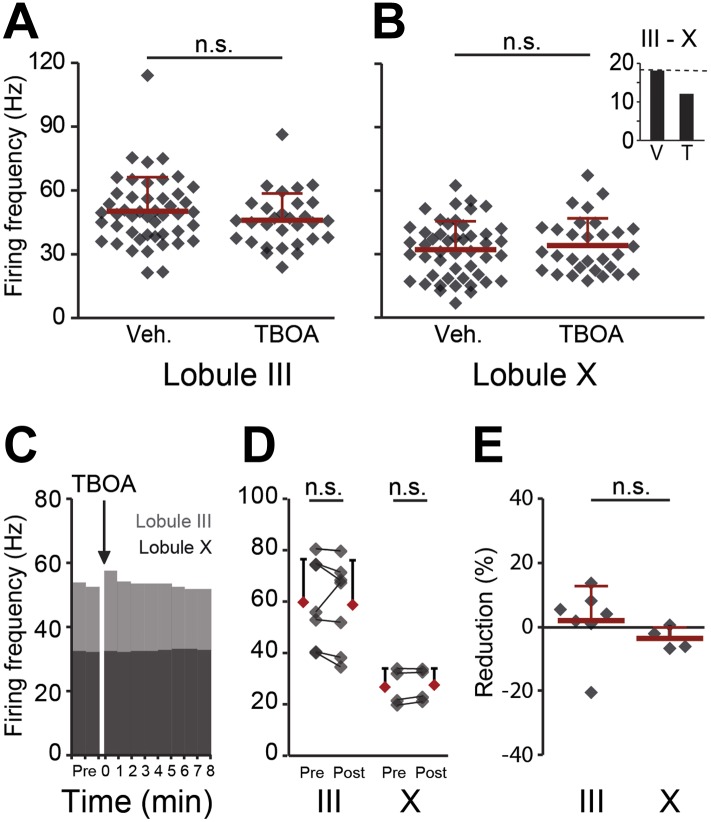
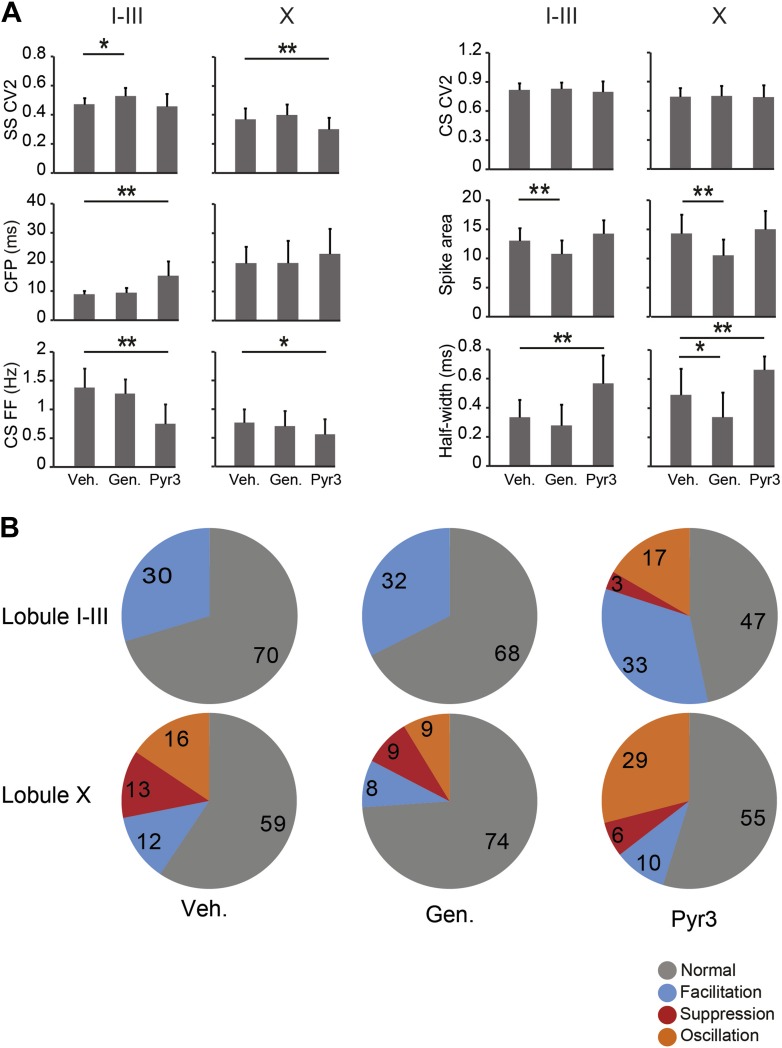
Due to the uniform cyto-architecture of the cerebellar cortex, its overall physiological characteristics have traditionally been considered to be homogeneous. In this study, we show in awake mice at rest that spiking activity of Purkinje cells, the sole output cells of the cerebellar cortex, differs between cerebellar modules and correlates with their expression of the glycolytic enzyme aldolase C or zebrin. Simple spike and complex spike frequencies were significantly higher in Purkinje cells located in zebrin-negative than zebrin-positive modules. The difference in simple spike frequency persisted when the synaptic input to, but not intrinsic activity of, Purkinje cells was manipulated. Blocking TRPC3, the effector channel of a cascade of proteins that have zebrin-like distribution patterns, attenuated the simple spike frequency difference. Our results indicate that zebrin-discriminated cerebellar modules operate at different frequencies, which depend on activation of TRPC3, and that this property is relevant for all cerebellar functions.DOI: http://dx.doi.org/10.7554/eLife.02536.001.
Keywords: Purkinje cells; TRPC3; cerebellar modules; cerebellum; zebrin II.
Copyright © 2014, Zhou et al.
Conflict of interest statement
The authors declare that no competing interests exist.
Figures
Comment in
-
All Purkinje cells are not created equal.Albergaria C, Carey MR. Albergaria C, et al. Elife. 2014 Jun 10;3:e03285. doi: 10.7554/eLife.03285. Elife. 2014. PMID: 24916160 Free PMC article.
References
Publication types
MeSH terms
Substances
LinkOut - more resources
Full Text Sources
Other Literature Sources
Molecular Biology Databases