




Categories
Recent Posts
- Quick Review: XTAR L4 Pro 1.2V Ni-MH & 1.5V Li-Ion AA/AAA Smart Battery Charger
- Tested: USB-C Barrel Connector Adapters (5.5mm OD, 2.1/2.5mm ID)
- Where Are They Now? More Discs Uncovered ft. Pressed DVD9s, CD-Rs, DVD±Rs & BD-Rs (Part 3)
- Review: Samsung 256GB Bar Plus (MUF-256BE4/AM) & USB Type-C Flash Drive (MUF-256DA/AM)
- Quick Review: PNY Turbo Attaché 3 256GB USB 3.0 Flash Drive (P-FD256TBOP-GE)
- Tested: Ritek 16x DVD±R ft. Traxdata Magic Silver, ValuePack, Maxell & Hi-Disc
- Analysis: Telstra’s Free Calls to Santa 2025 (#HOHOHO) – Actual Number & What’s New?
- Review: XTAR 1.5V AA LR 3000mAh USB-C Rechargeable Li-ion Battery
- Review: QCY H3S LDAC Dual-Driver Bluetooth v6.0 ANC Headphones
- Review: Klook Travel eSIM (RedteaGO)
- Tech Flashback: Double-Sided (4.7GB x 2) Recordable DVDs (Data Home, SuperX)
- Tech Flashback: Maxell DVD-R for Authoring (or Not?)
- Review: Truely – Unlimited (5GB then 512kbit/s) Switchless Travel eSIM
- Project: VBUS Fixer (When 5.5V is Just Too Much for Your USB Devices)
- Tested: Printable.1 “as seen on www.dvd-recordable.org” DVD-R [MID:VANGUARD]
- Tested: Pro-Feel DVD-R for Video 4x (PF DR120PW4X50PS) [MID:VANGUARD]
- Review: Thermal Master P3 Android/iOS/Windows USB-C Thermal Camera (×ばつ192/25Hz/35mK)
- Quick Review: Knowledge Zenith (KZ) PRX 4th-Generation Planar Diaphragm IEMs
- Quick Review: Qwertykeys Pearl Milk Tea Custom Keycaps
- Tested: CE8301 Boost, XL2001 (HW-676) & XL1583 (HW-681 Clone) Buck 5V USB Power Modules
- Review, Tested: XTAR 2600mAh 1.2V Ni-MH AA Rechargeable Battery
- Tested: DSN-MINI-360 (MP1482-based) 2A Buck Converter Module (4.5-18V In)
- Teardown: A&D Medical UA-651SL Blood Pressure Monitor
- Quick Review: Samsung Bar Plus 512GB USB 3.2 Gen 1 Flash Drive (MUF-512BE4/APC)
- Project: A Poor-Man’s Ambulatory Blood Pressure Monitor (ABPM) ft. A&D UA-651BLE
- Notes: Motorola moto g84 5G USB OTG Problems – Bad VBUS?
- Review: QCY MeloBuds N70 LDAC Hi-Res Bluetooth 6.0 Dual-Driver ANC TWS Earbuds
- Tech Flashback: The Solid-State Hybrid Drive (SSHD) ft. ST500LM000
- Tested: Amethystum Storage Technology 100GB 2-6x TL BDXL BD-R (BDR-M100BAZ)
- Project: U3SplitV1 – Breaking Apart a USB 3.x Host Port (for Desperate Times!)
- Review: EarFun Air Pro 3 Hybrid Active Noise Cancelling True Wireless Earbuds
- Review, Teardown: JBL Tune 520BT Wireless On-Ear Headphones
- Quick Review, Teardown: Thermaltake Argent MB1 RGB Mouse Bungee
- Review, Teardown: XTAR 1.5V AA CLR 4300 2700mAh Rechargeable Li-Ion Battery
- Review, Teardown: LIMETA EB40 10000mAh 2xUSB-C 2x18W BLE Energy Bank
- Review, Teardown: Novoo RG68 USB-C (x2)+USB-A 67W GaN Wall Charger
- Flashback+: Pioneer 1x DVD-RW (DVS-RW47B/U) and a DVD-Rot Issue?
- Quick Review: Orico 25PW1-C3 2.5″ USB-C 5Gbit/s Hard Drive Enclosure
- Review, Teardown: Origimagic Comet C1 Mini PC (Intel N97, 16+512GB, 2.5GbE)
- Experiment: Verbatim UltraSpeed+ 32x CD-RW on Non-US+ Drives?
- PSA: Validate Your Storage! JMicron JMS583 + KIOXIA BG4 Series SSD Issue?
- Notes: CD C1/C2 Error Quality Scanning – Modern vs. Older Drives, Software
- Mega Review: Enova Gyrfalcon S4000 Pro Universal Charger & Analyzer
- Where Are They Now? Semi-Loved Recordable DVD/CDs Get Tested (Part 2)
- Analysis: How SEO/AI Spam Got Onto a Government Domain & More
- Quick Review: MOONDROP Space Travel 2023 True Wireless Stereo ANC Earbuds (MD-TWS-022)
- Repair: Mechanical Keyboard Chatter (ft. Gigabyte Aivia Osmium)
- Tested: XTAR Ultra 3500D AA Lithium Non-Rechargeable Batteries
- Quick Review: Dell Latitude 5420 (14″ FHD, i5-1135G7, 16GB/256GB) + RZX 16GB 3200MHz DDR4 SODIMM
- Analysis: “Lorde – Virgin” CD Clear Disc Release – Will It Play?
Archives
- December 2025 (2)
- November 2025 (10)
- October 2025 (9)
- September 2025 (11)
- August 2025 (11)
- July 2025 (7)
- June 2025 (5)
- May 2025 (8)
- April 2025 (8)
- March 2025 (12)
- February 2025 (12)
- January 2025 (10)
- December 2024 (16)
- November 2024 (6)
- October 2024 (10)
- September 2024 (9)
- August 2024 (8)
- July 2024 (10)
- June 2024 (13)
- February 2024 (2)
- January 2024 (7)
- December 2023 (14)
- November 2023 (3)
- October 2023 (11)
- September 2023 (3)
- August 2023 (7)
- June 2023 (8)
- May 2023 (4)
- April 2023 (4)
- March 2023 (9)
- February 2023 (4)
- January 2023 (4)
- December 2022 (16)
- November 2022 (6)
- October 2022 (8)
- September 2022 (4)
- August 2022 (7)
- July 2022 (11)
- June 2022 (6)
- May 2022 (4)
- April 2022 (9)
- March 2022 (10)
- February 2022 (8)
- January 2022 (6)
- December 2021 (16)
- November 2021 (6)
- October 2021 (8)
- September 2021 (7)
- August 2021 (9)
- July 2021 (7)
- June 2021 (6)
- May 2021 (13)
- April 2021 (13)
- March 2021 (10)
- February 2021 (9)
- January 2021 (12)
- December 2020 (15)
- November 2020 (1)
- October 2020 (9)
- September 2020 (14)
- August 2020 (13)
- July 2020 (7)
- June 2020 (13)
- May 2020 (14)
- April 2020 (18)
- March 2020 (2)
- February 2020 (9)
- January 2020 (21)
- December 2019 (10)
- November 2019 (8)
- October 2019 (14)
- September 2019 (8)
- August 2019 (12)
- July 2019 (9)
- June 2019 (6)
- May 2019 (4)
- April 2019 (12)
- March 2019 (23)
- February 2019 (20)
- January 2019 (23)
- December 2018 (11)
- November 2018 (7)
- October 2018 (4)
- September 2018 (3)
- August 2018 (19)
- July 2018 (6)
- June 2018 (5)
- May 2018 (21)
- April 2018 (7)
- March 2018 (8)
- December 2017 (12)
- November 2017 (19)
- October 2017 (1)
- July 2017 (4)
- June 2017 (16)
- May 2017 (6)
- January 2017 (11)
- December 2016 (30)
- November 2016 (13)
- October 2016 (15)
- September 2016 (19)
- August 2016 (16)
- July 2016 (8)
- June 2016 (31)
- May 2016 (14)
- April 2016 (21)
- March 2016 (13)
- February 2016 (17)
- January 2016 (19)
- December 2015 (20)
- November 2015 (12)
- October 2015 (15)
- September 2015 (4)
- August 2015 (12)
- July 2015 (22)
- June 2015 (14)
- May 2015 (21)
- April 2015 (25)
- March 2015 (14)
- February 2015 (16)
- January 2015 (6)
- December 2014 (11)
- November 2014 (12)
- October 2014 (19)
- September 2014 (11)
- August 2014 (21)
- July 2014 (18)
- June 2014 (20)
- May 2014 (12)
- April 2014 (7)
- March 2014 (23)
- February 2014 (18)
- January 2014 (16)
- December 2013 (15)
- November 2013 (14)
- October 2013 (21)
- September 2013 (13)
- August 2013 (17)
- July 2013 (26)
- June 2013 (26)
- May 2013 (11)
- April 2013 (17)
- March 2013 (31)
- February 2013 (27)
- January 2013 (36)
- December 2012 (31)
- November 2012 (39)
- October 2012 (3)
- February 2012 (18)
- January 2012 (1)
Tags
- analysis
- audio
- battery
- cheap
- computer hardware
- computer storage
- ebay
- electronics
- element14
- event
- flash
- flash memory
- improvise
- led
- lighting
- made-in-china
- mobile
- networking
- new stuff
- opinion
- optical disc
- photography
- power
- power bank
- project
- public transport
- radio
- random
- repair
- review
- review-challenge
- rf
- roadtest
- salvage
- storage
- tablet
- teardown
- tested
- test equipment
- testing
- travel
- usb
- video
- vintage stuff
- visited
Recent Comments
- Kerry Lourash on Quick Review: XTAR L4 Pro 1.2V Ni-MH & 1.5V Li-Ion AA/AAA Smart Battery Charger
- Simon on Tested: USB-C Barrel Connector Adapters (5.5mm OD, 2.1/2.5mm ID)
- lui_gough on Tested: USB-C Barrel Connector Adapters (5.5mm OD, 2.1/2.5mm ID)
- Simon on Tested: USB-C Barrel Connector Adapters (5.5mm OD, 2.1/2.5mm ID)
- Simon on Failed, Teardown: Orbit Lighting 2x150W PAR38 Motion Sensor Light (OSLBDIY)
- lui_gough on Failed, Teardown: Orbit Lighting 2x150W PAR38 Motion Sensor Light (OSLBDIY)
- instantlyvaliantf4332cd3ad on Failed, Teardown: Orbit Lighting 2x150W PAR38 Motion Sensor Light (OSLBDIY)
- lui_gough on Review: Klook Travel eSIM (RedteaGO)
- aaron on Review: Klook Travel eSIM (RedteaGO)
- Mic on Review: Dell Wyse 5070 Thin Client (J5005, 8GB RAM, 64GB M.2 SATA SSD)
- Kerry Lourash on Review: Samsung 256GB Bar Plus (MUF-256BE4/AM) & USB Type-C Flash Drive (MUF-256DA/AM)
- Simon on Review, Teardown: VTOMAN Jump 600X Extra Battery 640Wh (PB-23)
- lui_gough on Review, Teardown: VTOMAN Jump 600X Extra Battery 640Wh (PB-23)
- Zerosquare on Analysis: Telstra’s Free Calls to Santa 2025 (#HOHOHO) – Actual Number & What’s New?
- Simon on Review, Teardown: VTOMAN Jump 600X Extra Battery 640Wh (PB-23)
- lui_gough on Review, Teardown: VTOMAN Jump 600X Extra Battery 640Wh (PB-23)
- Simon on Review, Teardown: VTOMAN Jump 600X Extra Battery 640Wh (PB-23)
- lui_gough on Review, Teardown: VTOMAN Jump 600X Extra Battery 640Wh (PB-23)
- Simon on Review, Teardown: VTOMAN Jump 600X Extra Battery 640Wh (PB-23)
- Gerry on Analysis: DVB-T2 Australian Television Networks Test Transmission
Meta
Review: XG autoelectric TL866CS MiniPro Universal USB Programmer
In terms of tools, I’ve always wanted to have something to work with various ROM and Flash chips within computers and peripherals as this can often come in handy for recovering from a bad flash, updating an old ROM chip in a device to gain new abilities, or for backing up the contents of ROM chips for safe-keeping and analysis.
In the past, out of desperation, I resorted to inelegant hacks like the above. It’s fine if you only have a one-off curiosity you need satisfied immediately, but once you get into the realm of having several different chips and potentially a desire to reprogram them, the complexity shoots up and the time investment just isn’t worth it anymore.
As a result, I went searching for a programmer which would fit my needs. I settled on the XG autoelectric TL866CS MiniPro universal USB programmer. There are cheaper programmers out there, but none of them were able to meet the wide range of supported chips (over 14,000) that the MiniPro had, and many of them were not as well-finished and instead looked like a development board. The TL866-series programmers were also attractive because they were completely USB bus powered and could develop the high Vpp programming voltages directly from the bus. I managed to grab one for just under AU55,ドル which is a pretty reasonable price. A slightly more expensive TL866A is slightly more capable with ICSP for microcontrollers as well, which the CS version lacks, but if you’re not interested in that, you can save a little money.
Unboxing
20160404204329532016040420432953 20160404204329542016040420432954 20160404204329552016040420432955
The unit arrived in a colour print, matte finish cardboard box, with almost all Chinese writing. It claims support for up to Windows 8 on the box, which is a good sign. The same packaging is used for both TL866CS and TL866A variants.
20160404204329562016040420432956
A barcode and contact details are provided on the rear.
20160404204429572016040420442957
A label is affixed to the inside lid which is sort of a quick-start guide. Ultimately, you don’t need this, as it’s basically a case of downloading the latest software, installing it and following instructions. The website itself is very slow to respond, probably due to underprovisioning and sitting behind the “great firewall”, but you can complete the download if patient enough. It also tells you the inclusions – the ICSP feature only for the TL866A.
20160404204429582016040420442958
The programmer is protected inside a thin plastic bag, with its nice 3M 40-pin ZIF socket showing at the top.
20160404204529602016040420452960
Aside from that, you get a warranty card, a USB 2.0 cable with ferrite bead and a driver CD which you probably shouldn’t use if you wish to get the most from the product.
20160404204829612016040420482961
The programmer has a very nice moulded case with logos and markings on the faces, and slotted vents for ventilation.
20160404204829622016040420482962 20160404205429682016040420542968
The only input is USB, a type B female connector for power and data. As this is the CS version, the ICSP port is blanked off.
20160404204829632016040420482963
The underside claims to have a serial number, but it doesn’t – instead that’s just the barcode. There are four “feet” however, without any form of rubber on them. The plastic unit has quite a bit of weight to it, and feels very solid.
Teardown
Taking the unit apart, at least, superficially is simple. Put the ZIF lever arm in the vertical position, undo the four screws on the underside and the casing comes apart. The board inside can be extracted out of the casing.
20160404205029642016040420502964
The internal design is a sandwich of two PCBs interconnected together with grounding pins soldered between the two boards and LEDs passed through slots making complete disassembly an utter pain (so I won’t do it). On the top side, we can see quality components already – 6 NXP 74HC373D octal D-type transparent latches. Near the top, it seems there is some power switching going on with SMD germanium diodes and transistors.
20160404205129662016040420512966
The weight of the unit becomes apparent when the centre section is examined – there are five fairly hefty inductors used for the boost/buck functions to derive the programming and data voltages. Some older chips needed close to 24V programming voltage, whereas some of the newer ones require 3.3V, which requires fairly flexible circuitry. I’m not sure, but I suspect this unit does not natively support 1.8V parts using its internal supply.
20160404205029652016040420502965
Peering in from the other side, we can see a crystal oscillator, and mostly empty space, with a row of pins (J1) that is probably used for initial programming.
20160404205229672016040420522967
The underside of the unit houses more fun, including a massive array of SMD resistors and Zener diodes which are likely to allow the inputs/outputs to handle overvoltage from shorts (e.g. Vpp to a data pin due to a faulty chip), or to allow for the data voltages to “adapt” to the provided Vcc by “crowbar-ing” the output. It might also serve to limit any fault currents from shorted pins with a logic level conflict. Two more octal D-latches can be seen underneath, along with a linear 3.3V regulator for the programming IC. Other components include a 74HC164D serial-to-parallel 8-bit shift register, two MC34063 switching regulators and a bunch of transistors, diodes and capacitors. The main IC is unknown, having its markings ground off during manufacture as a protection measure.
From a look inside, it seems that the unit has been designed with much thought to real-life “realities” and are built relatively well with quality components.
Setting Up and Using
Downloading the software from the site is an exercise in frustration, as the speed is as slow as dial-up (4kB/s), but at least it will complete after several attempts. Installation is straightforward, and will involve installing a special driver for this unit. Whether the software is completely free of vulnerabilities/nasties is not known, but I haven’t observed any strange behaviour myself.
The first thing it will do is prompt you to upgrade the firmware on the device, as it was shipped with a different firmware for an older version of the software. This is fast and relatively painless.
minipro-reflashminipro-reflash fwreflfwrefl
The about dialog shows that I’m using Version 6.50 of the software. The serial number of the programmer is actually displayed in the dialog box.
The software’s interface is fairly well thought out, although a little bit cramped. All of the features can be accessed through the menus, and most of the important ones can be accessed using the toolbar buttons – e.g. read chip ID, check the chip is blank, identify 25-type chips, compare, fill area, read, program, erase, CMOS logic chip test and multi-program.
The main part of the window shows the memory contents of the buffer, with certain programming options below in case certain variants of the chips have any particular special needs. The area above allows you to select the chip to be programmed.
wide-chip-supportwide-chip-support
As promised, the chip library is very extensive, and also features other less-expected types including some CMOS logic ICs for testing their functionality. That being said, the early pre-standard EPROMs from the late 70’s and early 80’s may not be supported – I found an Intel part in my collection which wasn’t in the database, and none of the other options with the same footprint had the same pinout.
The software supports loading Intel .HEX and standard .BIN files, which is a little bit lacking as sometimes other formats can be encountered. It also supports its own type of “project” file as well. Once all the requisite set-up is done, it’s a fairly simple job to program the chip, with automatic verify a standard feature.
program-eprom-successprogram-eprom-success
Reading chips is also very quick due to the fast strategy and USB 2.0 interface.
For EPROM erasure, there is also a blank-check function to verify the chip is blank prior to programming.
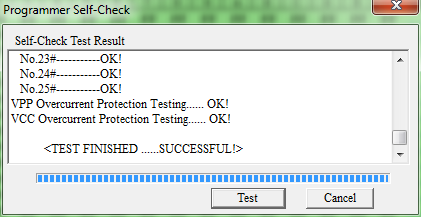
Should you ever doubt the programmer, it also has an inbuilt self-check to test for internal shorts.
If you have a need to program multiple chips, serial numbering is also provided, as is a multi-programmer feature for up to four programmers to be driven by the one instance.
Of course, the chips you are interested in may not be of the DIP type, so adapters and tools are necessary, and can be purchased separately. For example, I desired to work with PLCC32 chips commonly used for BIOSes, so I got an adapter for a few dollars.
20160404212030122016040421203012 20160404212030112016040421203011
Of course, chip extraction is a bugger, so I also decided to spend a few dollars on an extraction tool. The packaging on this one could have done way better on the English.
20160422123340382016042212334038 20160422123340392016042212334039 20160422123440412016042212344041
Unfortunately, this one has relatively thick legs which doesn’t get into the SMD sockets quite so well. Pulling chips out is like pulling teeth – only with great care can you ensure that the pins aren’t damaged. Anyway, it’s as simple as popping the chip into the adapter, and the adapter into the ZIF socket.
20160404212230142016040421223014
If you don’t like to wait, it can be quite useful to have some of these adapters in stock or to buy them as a set, however, some types can be quite costly and rarely used, so I prefer to buy them individually from whoever has it selling for the least and only when I actually have a need for them.
20160422123540422016042212354042 20160422123540432016042212354043
I decided to pick up a PLCC44 adapter as well, since I probably have a candidate chip to read out in the near future.
Conclusion
The XG autoelectric TL866CS programmer is very much a well built, well designed “Swiss army knife” programmer which is likely to support many of the chips you might encounter. I was able to effortlessly dump and reprogram some of the spare chips I had lying around without much thought or time investment due to the large database of supported chips and straightforward operation. For the price, I think it’s both economical and very much ahead of similar offerings at the same price. If you just want to dump ROMs, it could be a worthwhile investment. If it helps you unbrick a single device, it definitely would have earned its keep.
This entry was posted in Computing, Electronics and tagged chip, made-in-china, review, teardown, usb. Bookmark the permalink.
11 Responses to Review: XG autoelectric TL866CS MiniPro Universal USB Programmer
yet again Lui a great review was after a simple prog for some of my musical keyboards to update the revs.. and you have made my mind up thx
Thanks for the comment. I forgot to mention in the review that you can download the software from their website and install it without a programmer attached and use it to check whether it supports the chips you want to program before you purchase it. That can save you some money if you realize the chips you want to program are too old and have a different pin-out, for example.
The other thing is that certain chips might be from now-defunct manufacturers but have similar specs to the other chips, so even if you don’t find it in the database (e.g. my Signetics 27C256 in this post, you may be able to use another strategy for a similar device as long as it has the same pin-out and similar programming characteristics (so I used the AMD AM27C256 setting instead). Some of the more “standardized” chips are essentially identical in the way they are handled, just that they have a different chip ID, so the programmer will complain that you’re not using the right setting. This can easily be overcome by unticking the Chip ID tickbox underneath so the programmer will program without checking the chip ID matches.
– Gough
main controller is a PIC
there is hacked firmware (radioman) available upgrading CS to A (enables ISP header)
Thanks for the info – helpful as always. I probably wouldn’t bother myself as I’m mostly focused on *ROM/Flash, but it’s good to know. It would seem that users will need to solder their own header pins to the board to make use of it – given the differential is about AU20,ドル I suspect those interested in ICSP might just opt to buy the A variant instead.
– Gough
What a coincidence! I happen to have bought exactly the same model very recently. For similar reason I suspect as well, I want to dump and check many of the ROMs on the various bits of old hardware I have. I checked out other programmers and watched EEVBlogs hardware review before selecting it.
I also noted that apart from the EEPROMs, flash, and logic chip testing it also will program many micro controllers such at those from Microchip and Atmel. I’ll probably find the feature to test SRAM chips handy as well.
But like you said it does have issues like lack of support for some old chips. Something I tried was dumping, erasing and programming a chip salvaged from an old main board. Dumping worked great but it wouldn’t erase or program. It turns out the chip I had (a winbond flash chip) has a protection feature that requires specific data input to allow programming again. It’s possible to unlock it, but this programmer can’t do it.
still I’m happy with the purchase as it seems it will be a very handy tool indeed. I just hope I don’t run into an old chip that it doesn’t support.
Cheers
Sparcie
Very handy tool! I’m quite pleased, as I’ve checked the support lists of some of the other programmers and many don’t have support for even common chips used in modems, some PCI cards etc (e.g. ATMEL 49C series). With the chips that have code protection (especially microcontrollers), it’s often a pain to work it out and sometimes is an irreversible action as well without some very specific timed power glitches or other out-of-band attacks as part of code protection. Then there are the EPROMs which have no window – i.e. OTP type which could have been UV-erasable if they had used a cerdip package but didn’t bother to save costs and ensure reliability.
I’m quite happy if it even just dumps only – having a backup of some chips can be a lifesaver if they electrically fail later on down the track. Sourcing replacements will get a little more difficult, but at least with the eraseable sort, you can erase a pulled chip from another device and substitute, with the later chips sharing common power/address/data pin assignments that make cross-brand substitutions a possibility as long as you meet the timing specs.
I have dumped an ATMega328P from an Arduino out of curiosity and managed to find old code remnants from previous sketches (as code area is not cleared between loading) which was interesting but I’m still too afraid to program it using the MiniPro unless I learn up on the fusing parameters of the chip as the configuration changes made to some areas are sometimes irreversible.
– Gough
I use Data I/O Unisite and 3980 programmers. Old design, uses Motorola 68000 CPU, weighs a kiloton. Unisite uses 720 kB floppies (but I have the 80 MB Mass Storage Module). These machines are probably the most reliable programmers out there… and you don’t want to know they originally cost. A fully configured Unisite might have set you back 100,000ドル dollars! I think Data I/O still sells these beasties. I got mine off of Ebay. Probably bought a dozen of them (never paid more than 50ドル)… most just to get a particular programming adapter.
The 3980 is a newer, smaller design (1.4MB floppy / 80 MB hard drive). But it does not have quite the device support. About the only device I can’t program is Intel 1702A’s. Oh, and SDA2006 and MCM28xx serial EEPROMs (first gen EEPROMs). I had to build my own programmer for those.
Wow, indeed quite some heavy duty industrial strength stuff. Indeed, it too seems like a more universal, albeit less easy to use device, which they still do sell in some form. I doubt I’d ever have the room or money for one of those behemoths, but good to see they’re not entirely unloved :). Funny how you mentioned the 1702A’s – that is exactly the chip I managed to dig up in my collection that made me realize “gee, the pinouts for this don’t match anything the MiniPro can handle”. *chuckle*
– Gough
Great review!
Do you know if I can use this device to do in-system (in-circuit) programming using a SOIC8 Clip adapter?
Best regards!
I believe you can! Check out this link where a similar, albeit much smaller programmer was used to flash a BIOS:
http://goughlui.com/2016/07/25/wireless-card-whitelists-breaking-the-hp-probook-4525s-whitelist/
Did any one know how to add support of specific flash memory chip to this programmer? I need to read/write dump from/to Toshiba TC58NVG5D2FTA00.